Loading…
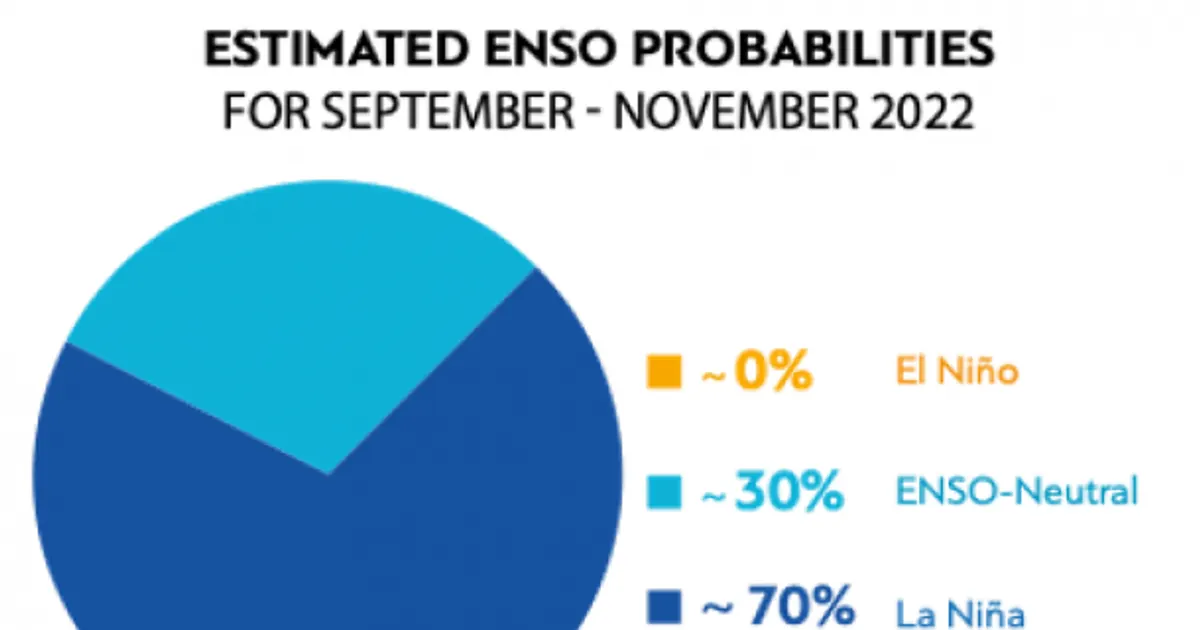
The World Meteorological Organization expects the current La Niña to persist through at least the end of 2022, making it the first triple-dip La Niña of the century. The chance of it continuing is 70 per cent for September to November, falling to 55 per cent for December to February.
Drought and flooding are being exacerbated in several regions.
A prolonged La Niña typically brings dryness to Argentina, southern Brazil and parts of the US Plains, which can cut South American soy and corn output and support global grain and oilseed prices.
 wmo.intAug 30, 2022
After 1,079 past bullish weather events, Soybeans moved a median +0.3% over 5 sessions (54% higher; middle half -1.4% to +2.0%), and +0.9% over 20.
After 1,465 past bullish weather events, Corn moved a median +0.2% over 5 sessions (54% higher; middle half -1.4% to +1.9%), and +0.9% over 20.
After 1,072 past bullish weather events, Wheat (SRW) moved a median +0.2% over 5 sessions (55% higher; middle half -1.4% to +2.3%), and +0.3% over 20.
Moves of each commodity's benchmark from the last close before the event. Historical reads pool past events of the same kind; they describe what happened, not what will. Not investment advice.
