Loading…
 FEEDSOFTAIFEEDSOFTAI
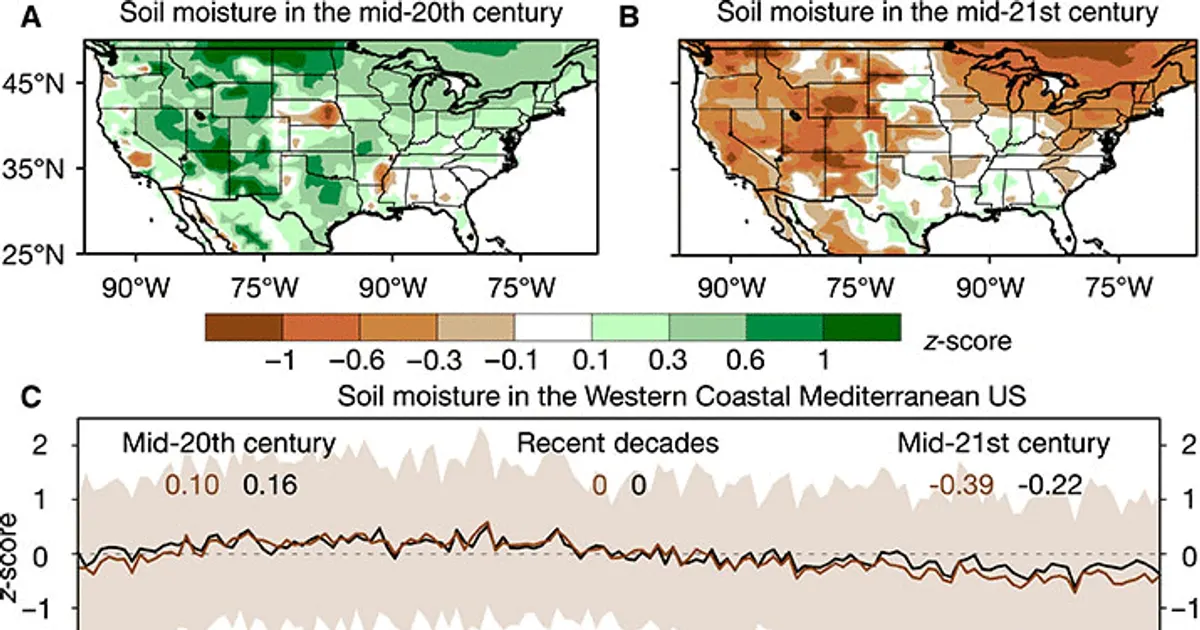
A Science Advances study using CESM2 climate model ensembles finds that wet summer soils normally cut La Nina-linked soil moisture deficits in the US Southwest. The study says rising evaporative demand from warming weakens this buffering.
The authors expect future Southwestern droughts to be more severe than historical experience suggests.
This is a climate research paper about long-term drought risk with no near-term supply signal for feed commodities. It has little effect on prices.
 science.orgYelin Jiang, Jason E. Smerdon, Richard Seager, Benjamin I. Cook, Mingfang TingNov 27, 2026
After 3,244 past report events, Corn moved a median +0.2% over 5 sessions (54% higher; middle half -1.3% to +1.7%), and +0.5% over 20.
Moves of each commodity's benchmark from the last close before the event. Historical reads pool past events of the same kind; they describe what happened, not what will. Not investment advice.