กำลังโหลด…
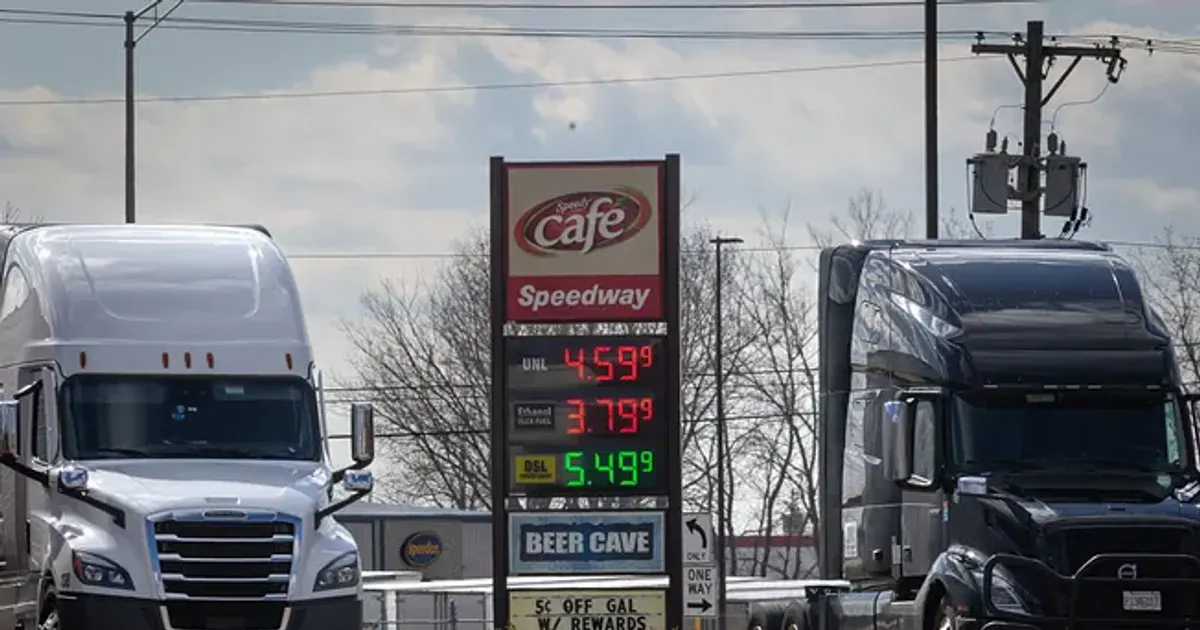
Brent crude fell below $95 at times after the US and Iran announced a two-week ceasefire, with Iran pledging safe passage through the Strait of Hormuz. Diesel prices had reached a national average of $5.64 per gallon before the ceasefire.
Analysts expect retail diesel relief to be slow and dependent on how the conflict is resolved.
Lower crude is a welcome cost relief for feed transport, but analysts expect retail diesel to fall slowly, keeping freight costs elevated. The outcome of the ceasefire will determine whether prices stay lower.
 truckingdive.comDavid Taube8 เม.ย. 2569
หลัง 250 เหตุการณ์ภูมิรัฐศาสตร์ที่ขาลงในอดีต น้ำมันดิบ (Brent) เคลื่อนไหวเฉลี่ย -3.1% ใน 5 วันทำการ (36% สูงขึ้น; ช่วงกลาง -7.9% ถึง +1.6%) และ -5.5% ใน 20 วัน.
หลัง 255 เหตุการณ์ภูมิรัฐศาสตร์ที่ขาลงในอดีต น้ำมันดิบ (WTI) เคลื่อนไหวเฉลี่ย -2.4% ใน 5 วันทำการ (31% สูงขึ้น; ช่วงกลาง -7.0% ถึง +1.7%) และ -5.0% ใน 20 วัน.
หลัง 51 เหตุการณ์ภูมิรัฐศาสตร์ที่ขาลงในอดีต ULSD / ดีเซล เคลื่อนไหวเฉลี่ย -2.4% ใน 5 วันทำการ (37% สูงขึ้น; ช่วงกลาง -8.2% ถึง +3.9%) และ -2.3% ใน 20 วัน.
การเคลื่อนไหวของราคาอ้างอิงของแต่ละสินค้านับจากการปิดตลาดครั้งสุดท้ายก่อนเหตุการณ์ ข้อมูลย้อนหลังรวมเหตุการณ์ชนิดเดียวกันในอดีต ซึ่งบอกสิ่งที่เกิดขึ้น ไม่ได้บอกสิ่งที่จะเกิด ไม่ใช่คำแนะนำการลงทุน
Brent fell below $95 on the ceasefire with Iran pledging safe passage through Hormuz, reducing the supply disruption premium in diesel.
Brent fell below $95 after the ceasefire and Iran's pledge of safe passage, lowering diesel feedstock and risk premia.
