Loading…
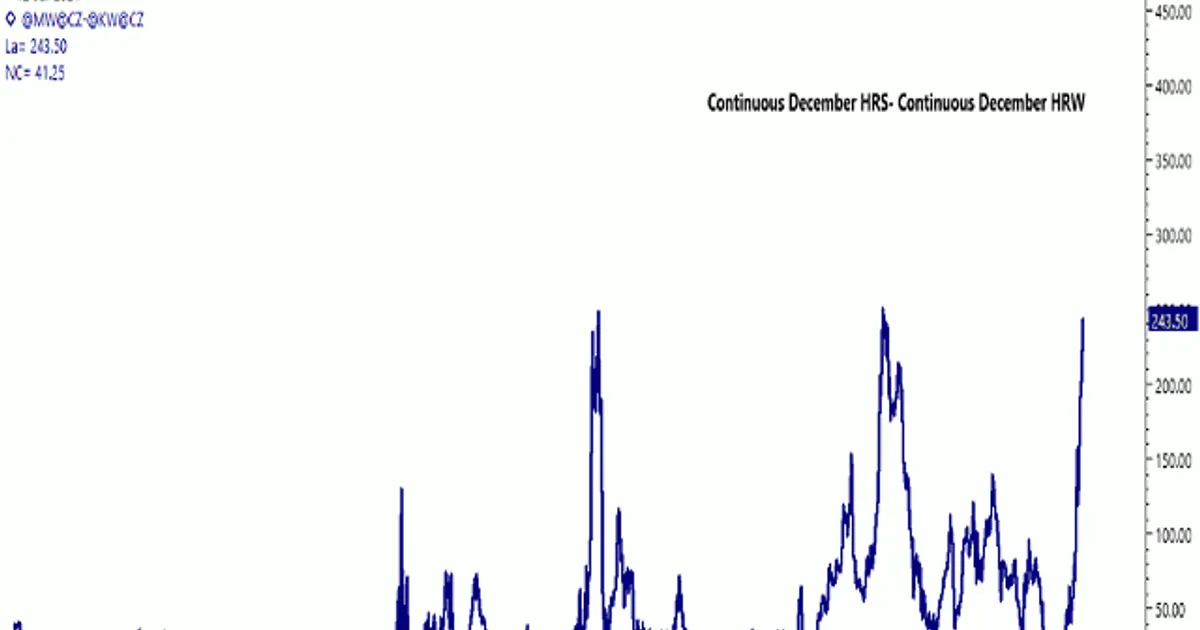
The December spring wheat/hard red winter wheat spread widened to $2.43 1/2 per bushel on July 16, near record highs for data back to 1980. Spring wheat conditions fell sharply in the US and Canada, with North Dakota and Saskatchewan both rated only 25% good to excellent or lower, while HRW protein averaged 11.4%, below the five-year average.
Poor spring wheat crops and below-average protein tighten supplies of high-protein milling wheat, which lifts the premium for HRS over HRW and supports wheat prices broadly.
 dtnpf.comCliff JamiesonJul 16, 2021
After 1,072 past bullish weather events, Wheat (SRW) moved a median +0.2% over 5 sessions (55% higher; middle half -1.4% to +2.3%), and +0.3% over 20.
After 70 past bearish weather events, Wheat (HRW) moved a median -0.6% over 5 sessions (41% higher; middle half -3.9% to +2.5%), and -1.1% over 20.
Moves of each commodity's benchmark from the last close before the event. Historical reads pool past events of the same kind; they describe what happened, not what will. Not investment advice.
