Loading…
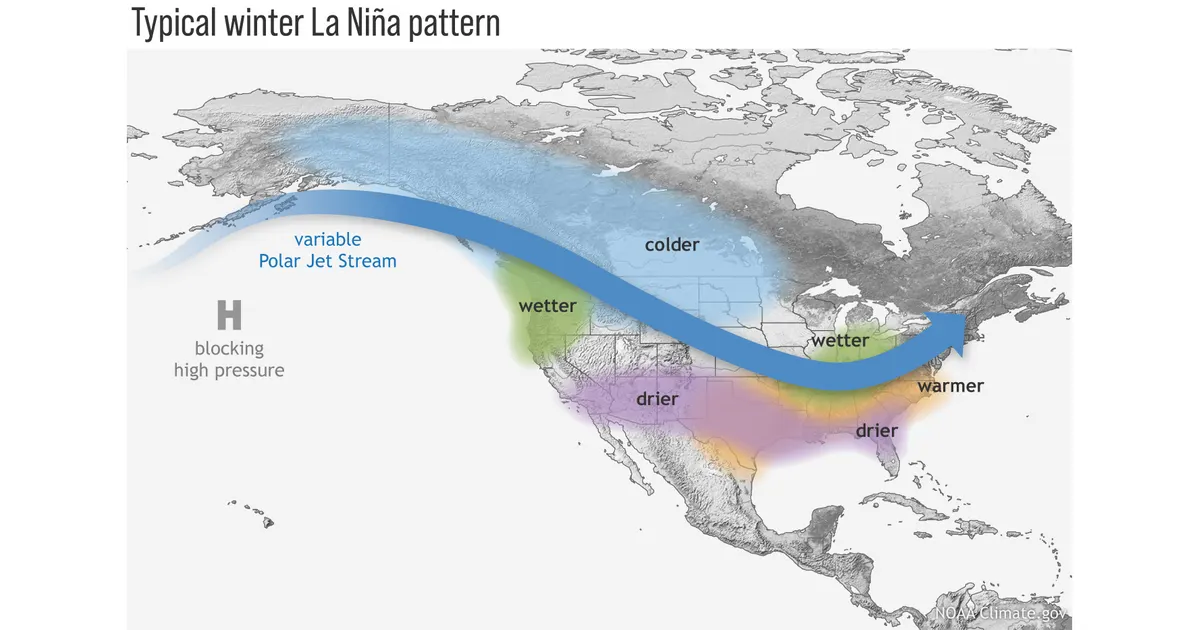
NOAA's Climate.gov update says La Niña is firmly established in the tropical Pacific, with August Niño-3.4 sea surface temperatures about 1.0 °C below average. It gives a 91% chance of La Niña through September-November and 80% through November-January, making a third consecutive La Niña winter very likely.
A confirmed third La Niña winter increases the odds of dry conditions in Argentina, southern Brazil and the US Plains, which could cut grain and oilseed output and support feed prices.
 climate.govEmily BeckerOct 1, 2022
After 1,465 past bullish weather events, Corn moved a median +0.2% over 5 sessions (54% higher; middle half -1.4% to +1.9%), and +0.9% over 20.
After 1,079 past bullish weather events, Soybeans moved a median +0.3% over 5 sessions (54% higher; middle half -1.4% to +2.0%), and +0.9% over 20.
After 1,072 past bullish weather events, Wheat (SRW) moved a median +0.2% over 5 sessions (55% higher; middle half -1.4% to +2.3%), and +0.3% over 20.
Moves of each commodity's benchmark from the last close before the event. Historical reads pool past events of the same kind; they describe what happened, not what will. Not investment advice.
