Loading…
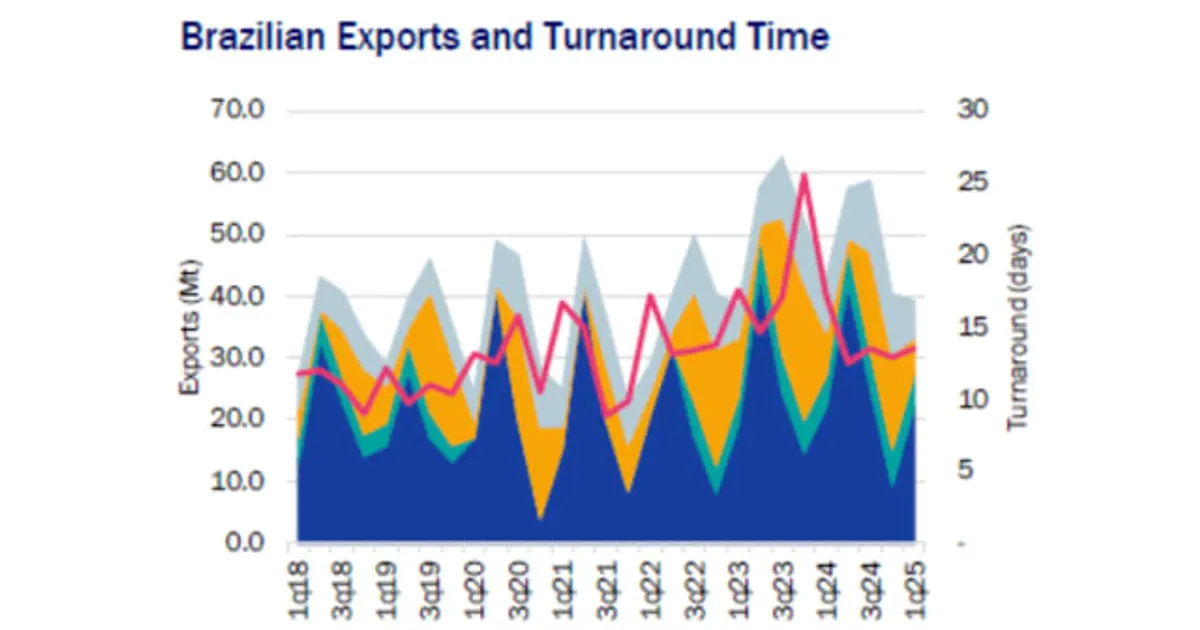
Soybean exports from the US are expected to be the dry bulk trade most affected by the US-China trade war. A 90-day tariff reprieve, with US tariffs lowered to 30% and Chinese tariffs to 10%, ends in mid-August, just before the seasonal ramp-up of US soybean exports.
Chinese buyers are likely to extend their shift toward South American origins, mainly Brazil.
Replacing US cargoes with shorter-haul South American supply reduces tonne-mile demand, especially for Panamax and Kamsarmax vessels, which weighs on ocean freight rates. US soybean export competitiveness also weakens while the tariff uncertainty lasts.
 ssyglobal.comSSYMay 12, 2025
After 803 past bearish trade events, Soybeans moved a median +0.0% over 5 sessions (51% higher; middle half -1.7% to +1.7%), and +0.9% over 20.
Not enough comparable past events yet for a historical read.
Moves of each commodity's benchmark from the last close before the event. Historical reads pool past events of the same kind; they describe what happened, not what will. Not investment advice.
