Loading…
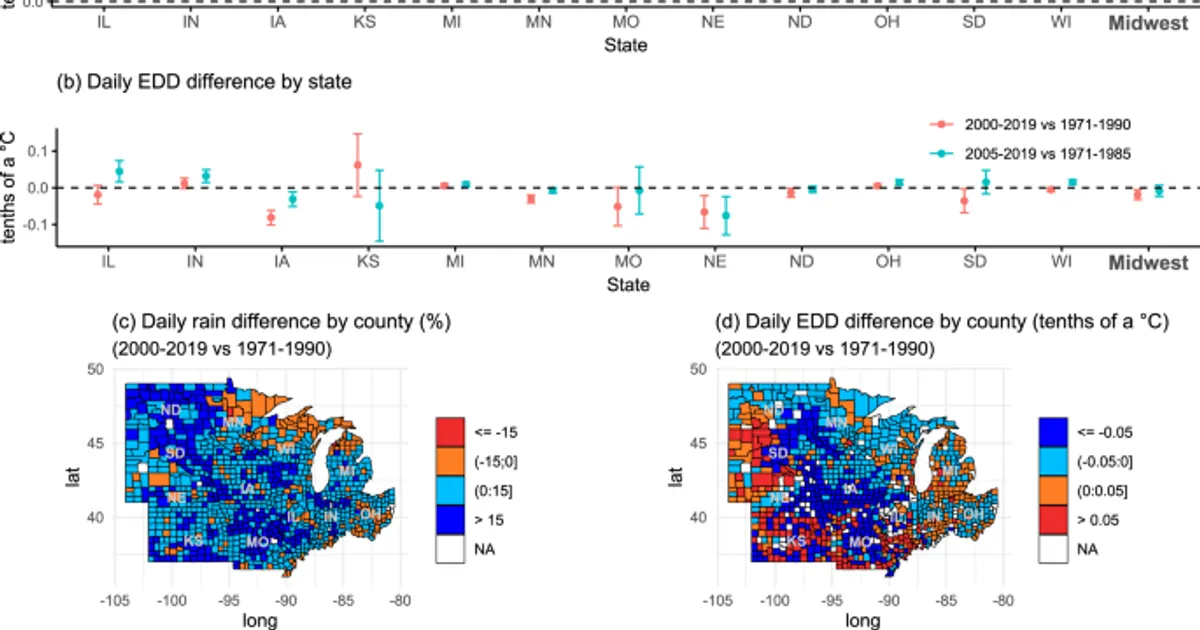
A study using weather, crop and price data from 1971 to 2019 finds that hot dry spells and excessive rain contributed to price increases for Midwest soybeans and corn at the Chicago Mercantile Exchange. In extreme cases, the predicted market response to weather shocks was comparable to a 10% price increase.
The impact of excessively wet spells grew stronger in later decades.
The findings show that weather shocks in the Midwest can move corn and soybean prices sharply, which matters for feed cost planning when summer weather is poor. The effect of wet extremes appears to be growing.
 nature.comCornejo, Magdalena, Merovich, Ezequiel, Merener, NicolasFeb 1, 2026
After 1,465 past bullish weather events, Corn moved a median +0.2% over 5 sessions (54% higher; middle half -1.4% to +1.9%), and +0.9% over 20.
After 1,079 past bullish weather events, Soybeans moved a median +0.3% over 5 sessions (54% higher; middle half -1.4% to +2.0%), and +0.9% over 20.
Moves of each commodity's benchmark from the last close before the event. Historical reads pool past events of the same kind; they describe what happened, not what will. Not investment advice.
