Cargando…
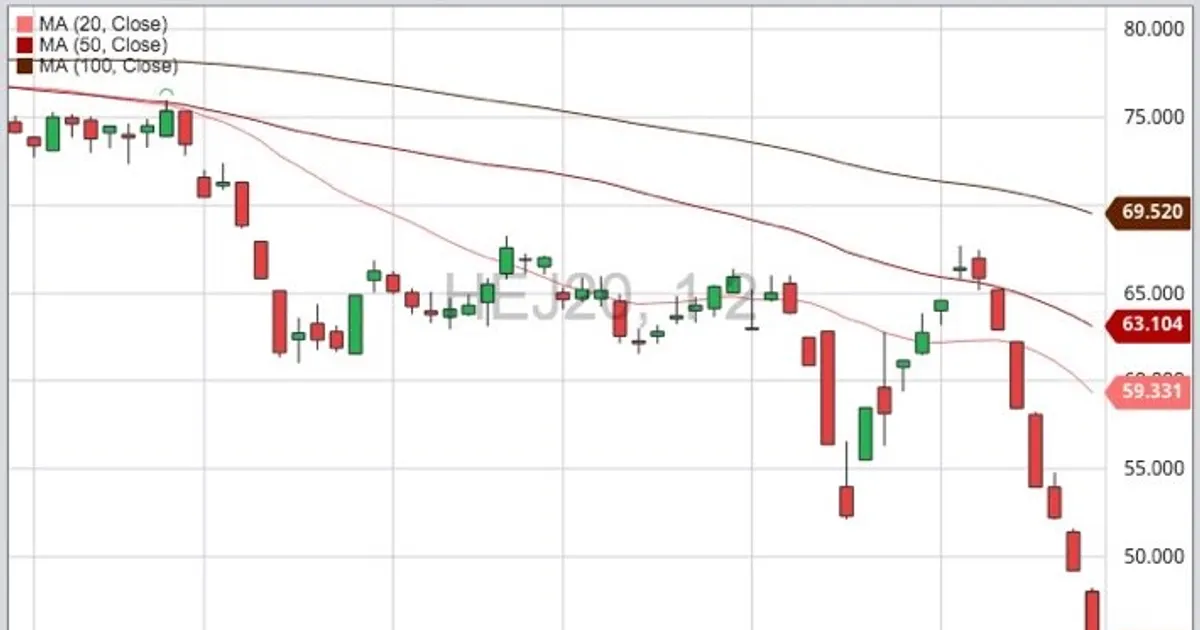
U.S. hog futures fell to a 3-1/2 year low on April 2, 2020 while live and feeder cattle dropped by daily limits amid recession fears and surging unemployment from the coronavirus pandemic. April lean hogs settled at 44.7 cents/lb, the lowest spot level since October 2016.
Packers slowed meat output as demand weakened and cash prices faded.
Demand destruction from restaurant closures and stay-at-home orders is outpacing supply adjustments, pushing livestock prices lower and weakening feeder demand for feed grains and meals.
 grainews.caGFM Network News2 abr 2020
Tras 117 eventos bajista de enfermedad pasados, Cerdo magro se movió una mediana de -0,6 % en 5 sesiones (36% al alza; mitad central entre -2,2 % y +1,6 %), y +1,2 % en 20.
Tras 70 eventos bajista de enfermedad pasados, Ganado en pie se movió una mediana de +0,0 % en 5 sesiones (51% al alza; mitad central entre -1,7 % y +1,0 %), y +0,4 % en 20.
Tras 46 eventos bajista de enfermedad pasados, Ganado de engorde (feeder) se movió una mediana de +0,3 % en 5 sesiones (54% al alza; mitad central entre -2,3 % y +1,6 %), y +1,8 % en 20.
Variaciones de la referencia de cada materia prima desde el último cierre antes del evento. Las lecturas históricas agrupan eventos pasados del mismo tipo; describen lo ocurrido, no lo que ocurrirá. No es asesoramiento de inversión.
Hog futures hit a 3.5-year low on April 2 as recession fears, surging unemployment and weaker packer demand drove the selloff, directly matching the move window.
Hog futures hit a 3.5-year low on April 2 amid recession fears, slowed packer output and weaker demand, directly capturing the week's crash.
Live and feeder cattle fell by daily limits on April 2 amid recession fears and unemployment, with packers slowing output on weaker demand.
Cattle limit-down on April 2 amid recession fears and surging unemployment, with packers slowing output as demand weakened.
Limit-down live and feeder cattle on April 2 amid recession fears and packers slowing output weakened demand for fed cattle.
