加载中…
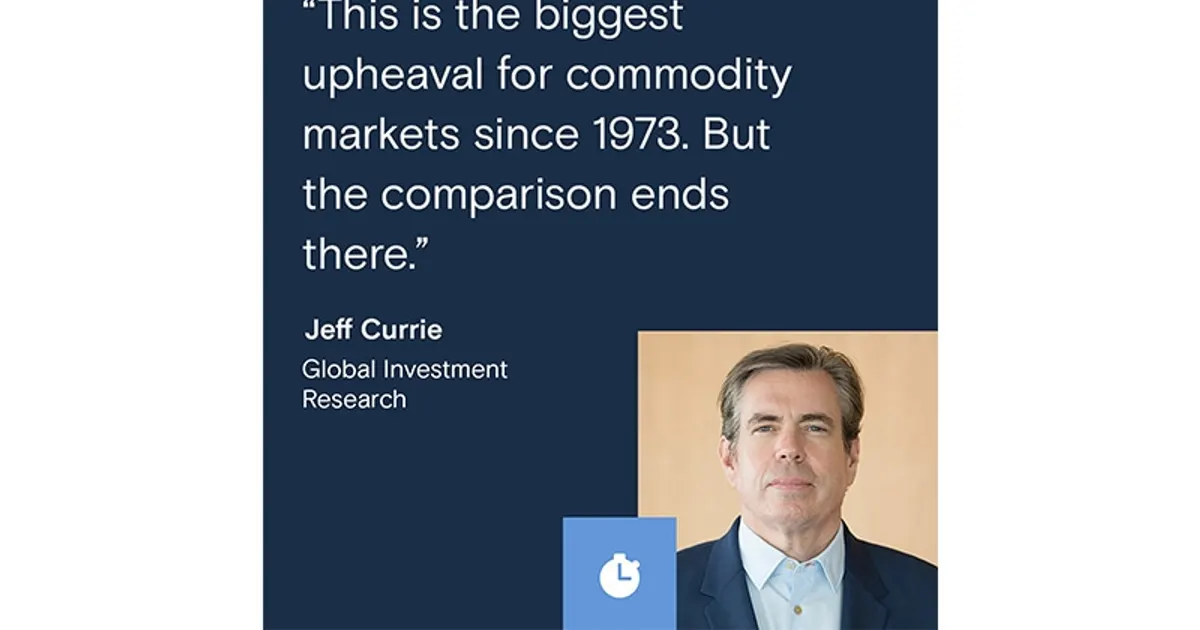
Goldman Sachs says the Russia-Ukraine war is the largest commodity market upheaval since the 1973 oil embargo, affecting grains, oil, gas, metals and other inputs. The energy shock is most acute in Europe, which relies heavily on Russian exports.
Goldman expects a buyer boycott and a decoupling between Russia and the West to shape supply chains.
Sanctions and the physical decoupling from Russia tighten supply across energy and agricultural inputs, supporting higher prices for grains and energy. Feed producers should expect elevated input costs as these supply chains reconfigure.
 goldmansachs.comJeff Currie Global Investment Research2022年3月17日
在过去 323 次看涨的地缘政治事件之后,玉米 在 5 个交易日内中位数变动 +0.5%(57% 上涨;中间一半区间为 -1.5% 至 +2.9%),20 个交易日内为 +0.9%。
在过去 361 次看涨的地缘政治事件之后,小麦(SRW) 在 5 个交易日内中位数变动 +0.7%(58% 上涨;中间一半区间为 -1.4% 至 +3.7%),20 个交易日内为 +1.3%。
在过去 626 次看涨的地缘政治事件之后,原油(WTI) 在 5 个交易日内中位数变动 +2.1%(62% 上涨;中间一半区间为 -2.3% 至 +8.5%),20 个交易日内为 +1.6%。
在过去 136 次看涨的地缘政治事件之后,天然气 在 5 个交易日内中位数变动 +2.7%(63% 上涨;中间一半区间为 -1.8% 至 +8.8%),20 个交易日内为 +4.0%。
各商品基准价相对事件前最后收盘价的变动。历史数据汇总同类过往事件;仅描述已发生的情况,不代表未来走势。不构成投资建议。
