加载中…
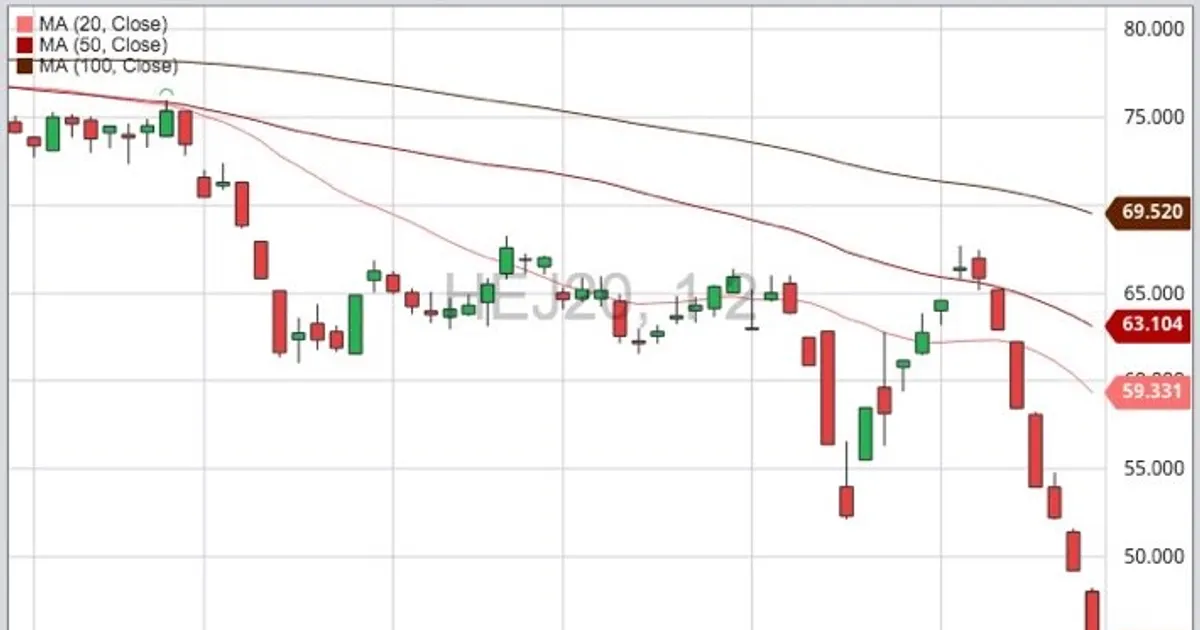
U.S. hog futures fell to a 3-1/2 year low on April 2, 2020 while live and feeder cattle dropped by daily limits amid recession fears and surging unemployment from the coronavirus pandemic. April lean hogs settled at 44.7 cents/lb, the lowest spot level since October 2016.
Packers slowed meat output as demand weakened and cash prices faded.
Demand destruction from restaurant closures and stay-at-home orders is outpacing supply adjustments, pushing livestock prices lower and weakening feeder demand for feed grains and meals.
 grainews.caGFM Network News2020年4月2日
在过去 117 次看跌的疫病事件之后,生猪(瘦肉型) 在 5 个交易日内中位数变动 -0.6%(36% 上涨;中间一半区间为 -2.2% 至 +1.6%),20 个交易日内为 +1.2%。
在过去 70 次看跌的疫病事件之后,活牛 在 5 个交易日内中位数变动 +0.0%(51% 上涨;中间一半区间为 -1.7% 至 +1.0%),20 个交易日内为 +0.4%。
在过去 46 次看跌的疫病事件之后,架子牛 在 5 个交易日内中位数变动 +0.3%(54% 上涨;中间一半区间为 -2.3% 至 +1.6%),20 个交易日内为 +1.8%。
各商品基准价相对事件前最后收盘价的变动。历史数据汇总同类过往事件;仅描述已发生的情况,不代表未来走势。不构成投资建议。
Hog futures hit a 3.5-year low on April 2 as recession fears, surging unemployment and weaker packer demand drove the selloff, directly matching the move window.
Hog futures hit a 3.5-year low on April 2 amid recession fears, slowed packer output and weaker demand, directly capturing the week's crash.
Live and feeder cattle fell by daily limits on April 2 amid recession fears and unemployment, with packers slowing output on weaker demand.
Cattle limit-down on April 2 amid recession fears and surging unemployment, with packers slowing output as demand weakened.
Limit-down live and feeder cattle on April 2 amid recession fears and packers slowing output weakened demand for fed cattle.
