加载中…
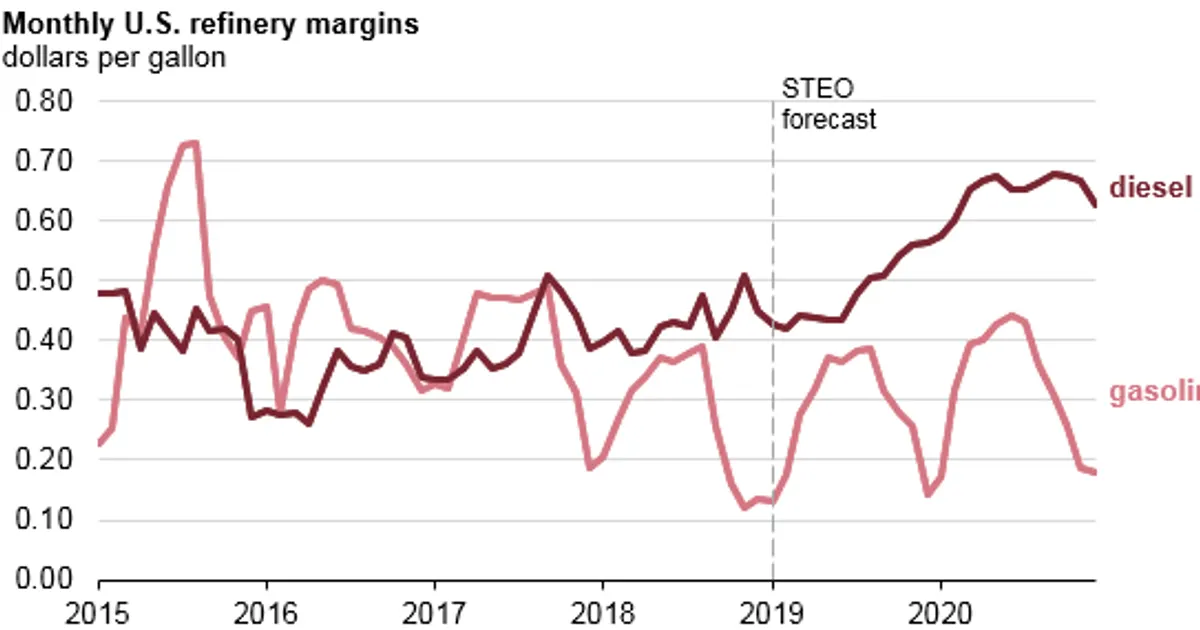
The EIA's January 2019 Short-Term Energy Outlook analyzes how IMO rules capping marine fuel sulfur at 0.5% from January 1, 2020 will affect markets. Refiners must either upgrade residual oil or process lighter crudes.
The agency expects upward pressure on diesel margins and modest upward pressure on crude prices in late 2019 and early 2020.
Ships shifting to low-sulfur distillate fuel should lift diesel and crude-linked energy costs, raising feed transport and drying costs for feed buyers. The effect is expected to be most acute in 2020 and fade afterward.
 eia.gov2019年1月15日
在过去 109 次看涨的报告事件之后,ULSD / 柴油 在 5 个交易日内中位数变动 +0.2%(51% 上涨;中间一半区间为 -3.3% 至 +3.9%),20 个交易日内为 +0.3%。
在过去 131 次看涨的报告事件之后,原油(WTI) 在 5 个交易日内中位数变动 +1.2%(60% 上涨;中间一半区间为 -1.3% 至 +3.4%),20 个交易日内为 +2.9%。
在过去 116 次看涨的报告事件之后,原油(Brent) 在 5 个交易日内中位数变动 +1.3%(66% 上涨;中间一半区间为 -1.0% 至 +3.1%),20 个交易日内为 +2.0%。
各商品基准价相对事件前最后收盘价的变动。历史数据汇总同类过往事件;仅描述已发生的情况,不代表未来走势。不构成投资建议。
