加载中…
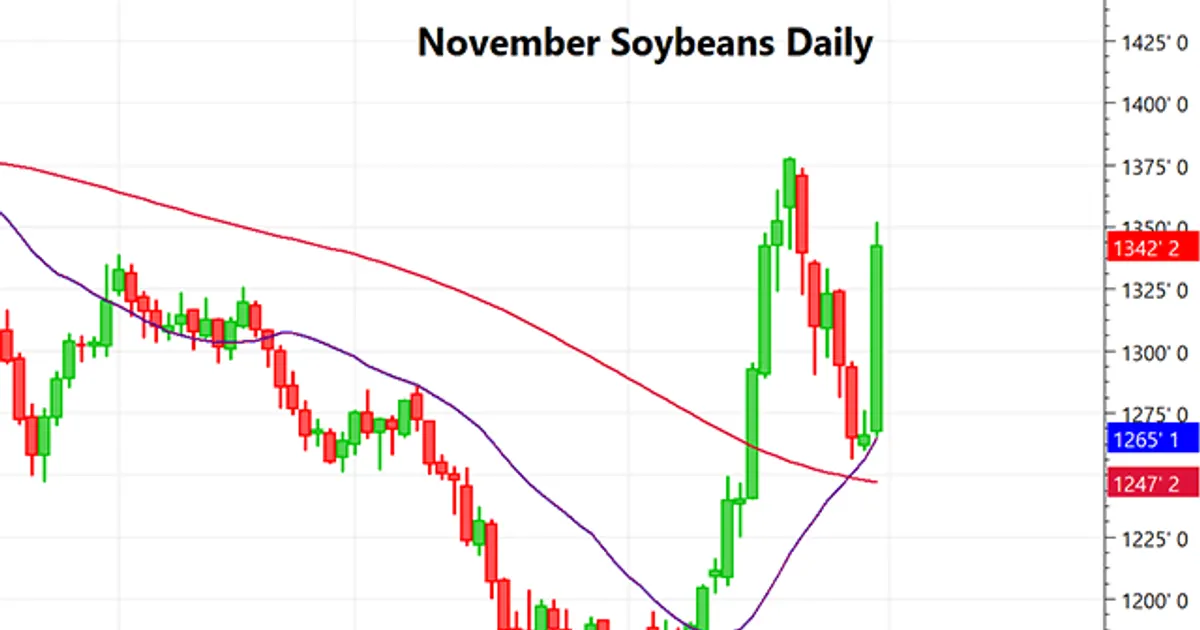
November soybean futures jumped after USDA's June stocks and acreage reports showed soybean plantings about 4 million acres below March intentions. Corn June 1 stocks came in at 4.106 billion bushels, the lowest since 2013-14, and corn plantings were 94.1 million acres, well above trade estimates.
The soybean acreage shortfall and tighter corn stocks support prices for both crops, with lower soybean supplies adding support to meal and oil.
 dtnpf.comDana Mantini2023年6月30日
在过去 747 次看涨的报告事件之后,大豆 在 5 个交易日内中位数变动 +0.3%(54% 上涨;中间一半区间为 -1.4% 至 +2.1%),20 个交易日内为 +0.8%。
在过去 414 次看涨的报告事件之后,豆粕 在 5 个交易日内中位数变动 -0.1%(48% 上涨;中间一半区间为 -2.1% 至 +2.3%),20 个交易日内为 +0.3%。
在过去 770 次中性的报告事件之后,玉米 在 5 个交易日内中位数变动 +0.2%(54% 上涨;中间一半区间为 -1.1% 至 +1.6%),20 个交易日内为 +0.7%。
各商品基准价相对事件前最后收盘价的变动。历史数据汇总同类过往事件;仅描述已发生的情况,不代表未来走势。不构成投资建议。
The June 30 Acreage report showed corn plantings of 94.1 million acres, well above trade estimates, which is bearish for supply and likely drove the sharp drop, partly offset by low June 1 stocks.
The USDA June Acreage report (soybean plantings ~4M acres below March intentions) is the likely cause of the soybean surge, but it was released 2023-06-30, after the move window ending 06/29, so this is only a possible link via pre-report positioning.
