Đang tải…
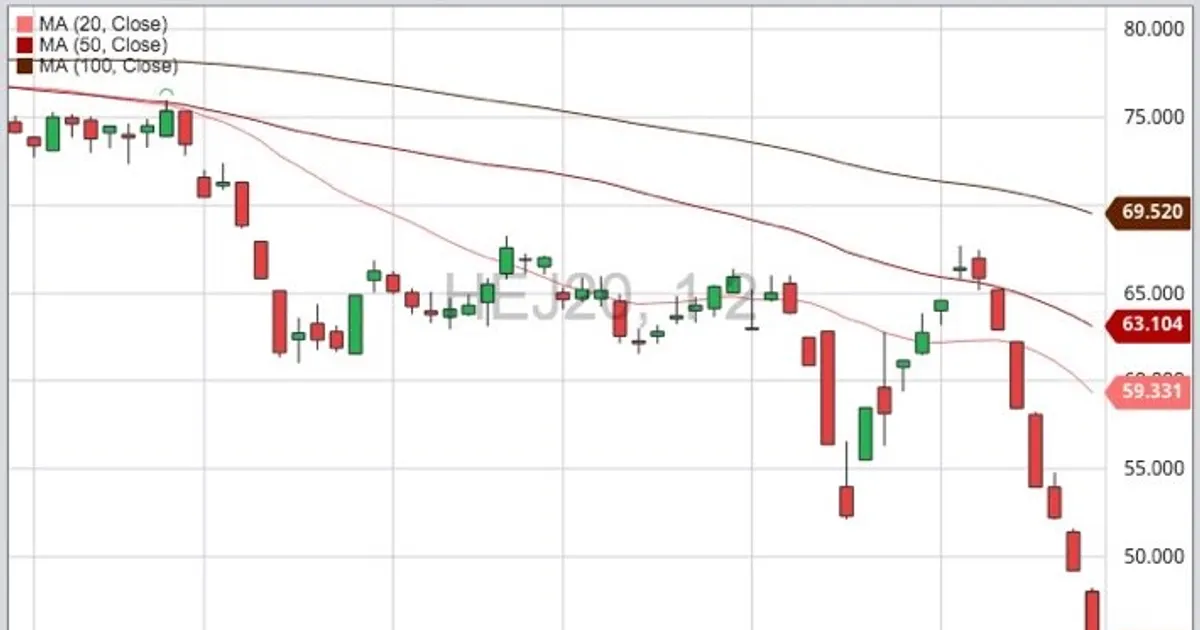
U.S. hog futures fell to a 3-1/2 year low on April 2, 2020 while live and feeder cattle dropped by daily limits amid recession fears and surging unemployment from the coronavirus pandemic. April lean hogs settled at 44.7 cents/lb, the lowest spot level since October 2016.
Packers slowed meat output as demand weakened and cash prices faded.
Demand destruction from restaurant closures and stay-at-home orders is outpacing supply adjustments, pushing livestock prices lower and weakening feeder demand for feed grains and meals.
 grainews.caGFM Network News2 thg 4, 2020
Sau 117 sự kiện dịch bệnh giảm giá trước đây, Lợn nạc biến động trung vị -0,6% trong 5 phiên (tăng 36%; nửa giữa từ -2,2% đến +1,6%), và +1,2% trong 20 phiên.
Sau 70 sự kiện dịch bệnh giảm giá trước đây, Bò thịt hơi biến động trung vị +0,0% trong 5 phiên (tăng 51%; nửa giữa từ -1,7% đến +1,0%), và +0,4% trong 20 phiên.
Sau 46 sự kiện dịch bệnh giảm giá trước đây, Bò giống (feeder) biến động trung vị +0,3% trong 5 phiên (tăng 54%; nửa giữa từ -2,3% đến +1,6%), và +1,8% trong 20 phiên.
Biến động benchmark của từng hàng hóa so với giá đóng cửa trước sự kiện. Số liệu lịch sử gộp các sự kiện cùng loại trong quá khứ; chúng mô tả điều đã xảy ra, không phải điều sẽ xảy ra. Không phải tư vấn đầu tư.
Hog futures hit a 3.5-year low on April 2 as recession fears, surging unemployment and weaker packer demand drove the selloff, directly matching the move window.
Hog futures hit a 3.5-year low on April 2 amid recession fears, slowed packer output and weaker demand, directly capturing the week's crash.
Live and feeder cattle fell by daily limits on April 2 amid recession fears and unemployment, with packers slowing output on weaker demand.
Cattle limit-down on April 2 amid recession fears and surging unemployment, with packers slowing output as demand weakened.
Limit-down live and feeder cattle on April 2 amid recession fears and packers slowing output weakened demand for fed cattle.
