กำลังโหลด…
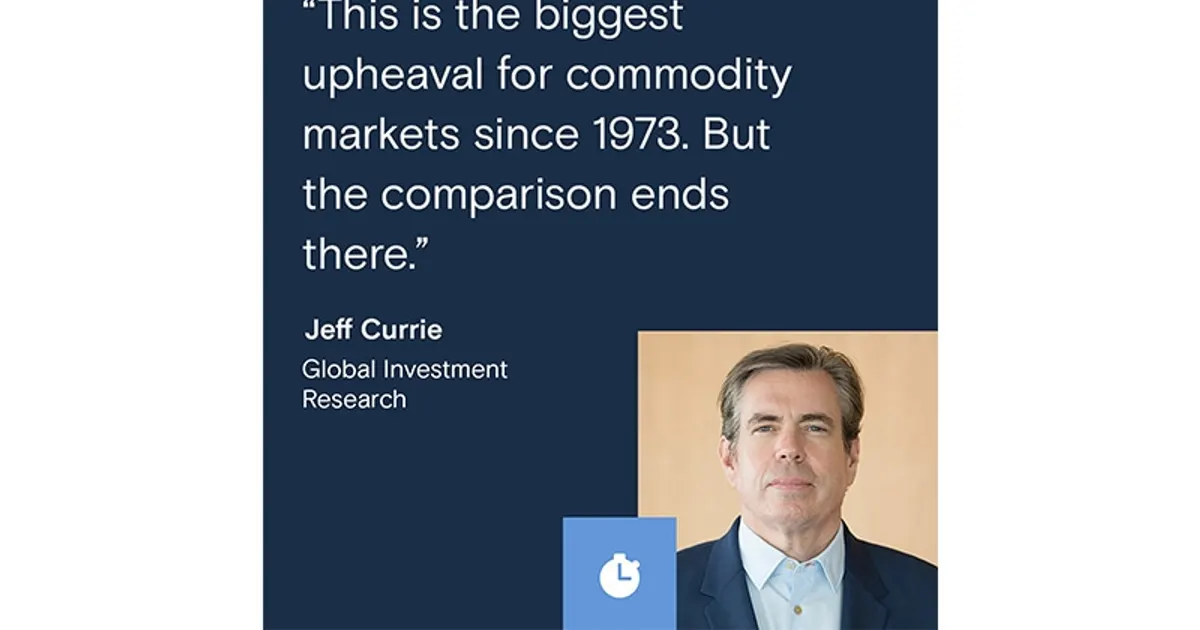
Goldman Sachs says the Russia-Ukraine war is the largest commodity market upheaval since the 1973 oil embargo, affecting grains, oil, gas, metals and other inputs. The energy shock is most acute in Europe, which relies heavily on Russian exports.
Goldman expects a buyer boycott and a decoupling between Russia and the West to shape supply chains.
Sanctions and the physical decoupling from Russia tighten supply across energy and agricultural inputs, supporting higher prices for grains and energy. Feed producers should expect elevated input costs as these supply chains reconfigure.
 goldmansachs.comJeff Currie Global Investment Research17 มี.ค. 2565
หลัง 323 เหตุการณ์ภูมิรัฐศาสตร์ที่ขาขึ้นในอดีต ข้าวโพด เคลื่อนไหวเฉลี่ย +0.5% ใน 5 วันทำการ (57% สูงขึ้น; ช่วงกลาง -1.5% ถึง +2.9%) และ +0.9% ใน 20 วัน.
หลัง 361 เหตุการณ์ภูมิรัฐศาสตร์ที่ขาขึ้นในอดีต ข้าวสาลี (SRW) เคลื่อนไหวเฉลี่ย +0.7% ใน 5 วันทำการ (58% สูงขึ้น; ช่วงกลาง -1.4% ถึง +3.7%) และ +1.3% ใน 20 วัน.
หลัง 626 เหตุการณ์ภูมิรัฐศาสตร์ที่ขาขึ้นในอดีต น้ำมันดิบ (WTI) เคลื่อนไหวเฉลี่ย +2.1% ใน 5 วันทำการ (62% สูงขึ้น; ช่วงกลาง -2.3% ถึง +8.5%) และ +1.6% ใน 20 วัน.
หลัง 136 เหตุการณ์ภูมิรัฐศาสตร์ที่ขาขึ้นในอดีต ก๊าซธรรมชาติ เคลื่อนไหวเฉลี่ย +2.7% ใน 5 วันทำการ (63% สูงขึ้น; ช่วงกลาง -1.8% ถึง +8.8%) และ +4.0% ใน 20 วัน.
การเคลื่อนไหวของราคาอ้างอิงของแต่ละสินค้านับจากการปิดตลาดครั้งสุดท้ายก่อนเหตุการณ์ ข้อมูลย้อนหลังรวมเหตุการณ์ชนิดเดียวกันในอดีต ซึ่งบอกสิ่งที่เกิดขึ้น ไม่ได้บอกสิ่งที่จะเกิด ไม่ใช่คำแนะนำการลงทุน
