Memuat…
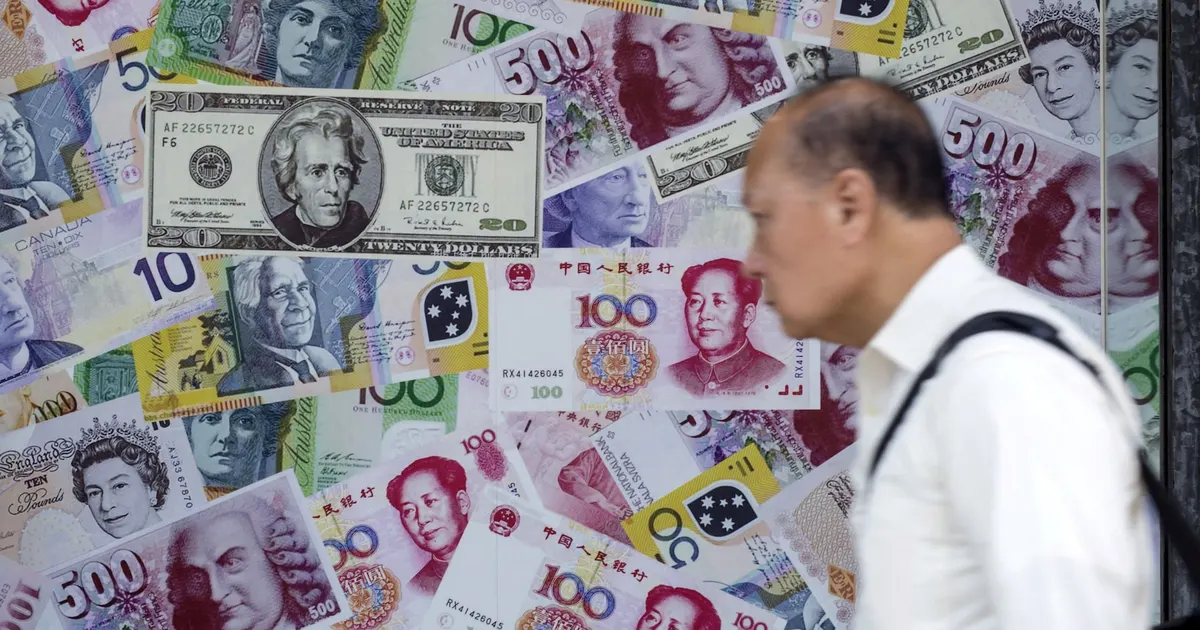
Analysts said U.S. tariffs under President Trump have undermined confidence in the dollar and disrupted the flow of trade dollars into U.S. assets. Asian currencies have rallied sharply against the dollar as a result.
Tariffs reduce Chinese exporters' access to U.S. customers, which weakens their dollar receipts and can cut into demand for U.S. farm goods. A weaker dollar generally supports US commodity export prices.
 reuters.comRae Wee, Samuel Shen6 Mei 2025
Setelah 39 peristiwa perdagangan bearish sebelumnya, Dolar AS (Luas) bergerak median -0,4% selama 5 sesi (26% lebih tinggi; separuh tengah -1,1% sampai +0,0%), dan -0,8% selama 20 sesi.
Setelah 22 peristiwa perdagangan bearish sebelumnya, Yuan Tiongkok (CNY per USD) bergerak median -0,1% selama 5 sesi (41% lebih tinggi; separuh tengah -0,7% sampai +0,3%), dan -0,3% selama 20 sesi.
Pergerakan benchmark setiap komoditas dari penutupan terakhir sebelum peristiwa. Pembacaan historis menggabungkan peristiwa serupa di masa lalu; itu menggambarkan apa yang terjadi, bukan apa yang akan terjadi. Bukan nasihat investasi.
Tariff-driven loss of confidence in the dollar and a broad Asian FX rally explain the dollar-weakness backdrop behind the yuan's gain.
