Memuat…
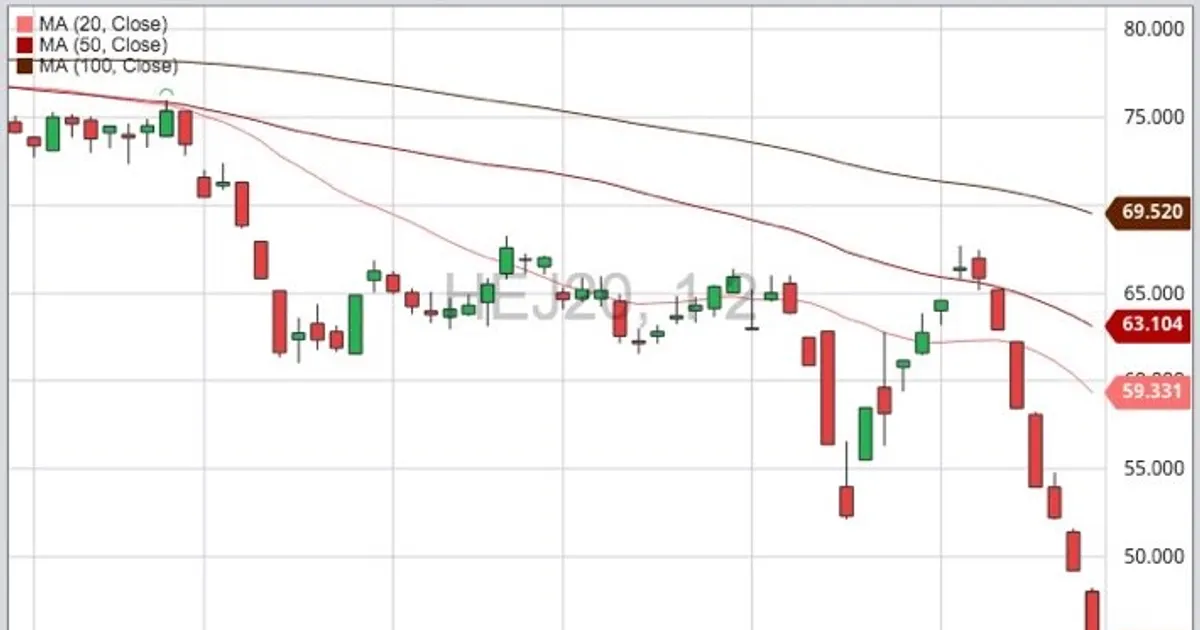
U.S. hog futures fell to a 3-1/2 year low on April 2, 2020 while live and feeder cattle dropped by daily limits amid recession fears and surging unemployment from the coronavirus pandemic. April lean hogs settled at 44.7 cents/lb, the lowest spot level since October 2016.
Packers slowed meat output as demand weakened and cash prices faded.
Demand destruction from restaurant closures and stay-at-home orders is outpacing supply adjustments, pushing livestock prices lower and weakening feeder demand for feed grains and meals.
 grainews.caGFM Network News2 Apr 2020
Setelah 117 peristiwa penyakit bearish sebelumnya, Babi Hidup (Lean Hogs) bergerak median -0,6% selama 5 sesi (36% lebih tinggi; separuh tengah -2,2% sampai +1,6%), dan +1,2% selama 20 sesi.
Setelah 70 peristiwa penyakit bearish sebelumnya, Sapi Hidup bergerak median +0,0% selama 5 sesi (51% lebih tinggi; separuh tengah -1,7% sampai +1,0%), dan +0,4% selama 20 sesi.
Setelah 46 peristiwa penyakit bearish sebelumnya, Sapi Bakalan bergerak median +0,3% selama 5 sesi (54% lebih tinggi; separuh tengah -2,3% sampai +1,6%), dan +1,8% selama 20 sesi.
Pergerakan benchmark setiap komoditas dari penutupan terakhir sebelum peristiwa. Pembacaan historis menggabungkan peristiwa serupa di masa lalu; itu menggambarkan apa yang terjadi, bukan apa yang akan terjadi. Bukan nasihat investasi.
Hog futures hit a 3.5-year low on April 2 as recession fears, surging unemployment and weaker packer demand drove the selloff, directly matching the move window.
Hog futures hit a 3.5-year low on April 2 amid recession fears, slowed packer output and weaker demand, directly capturing the week's crash.
Live and feeder cattle fell by daily limits on April 2 amid recession fears and unemployment, with packers slowing output on weaker demand.
Cattle limit-down on April 2 amid recession fears and surging unemployment, with packers slowing output as demand weakened.
Limit-down live and feeder cattle on April 2 amid recession fears and packers slowing output weakened demand for fed cattle.
