Loading…
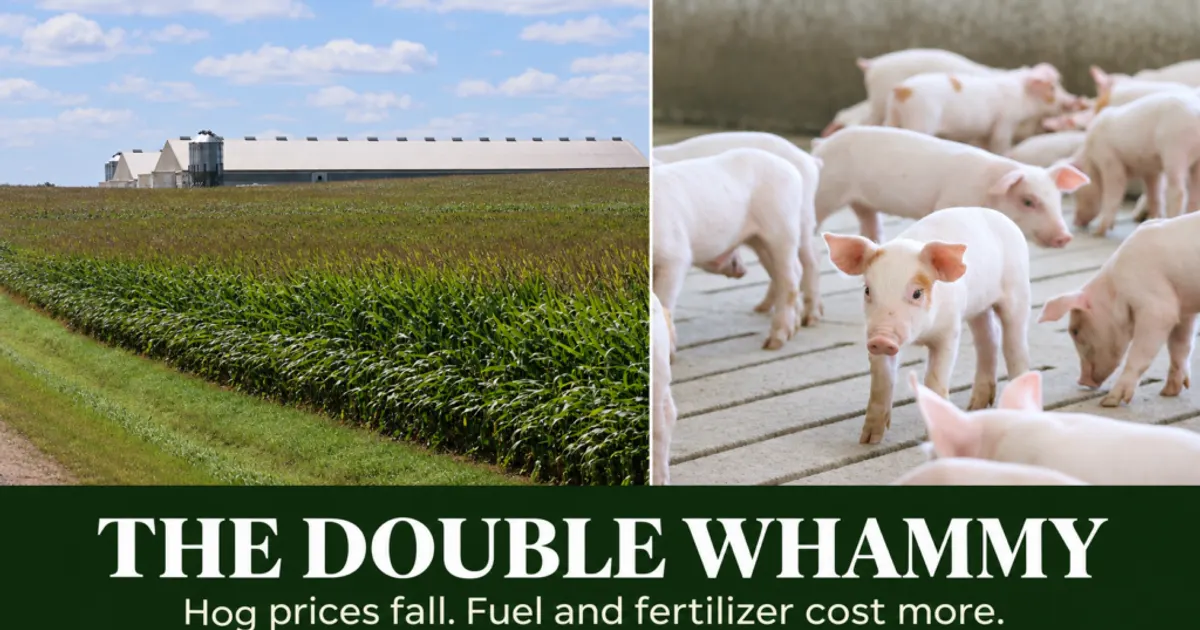
Hog prices are under pressure, while diesel and fertilizer costs remain higher than a year earlier, squeezing producers that also grow grain. USDA data cited in the article found that 61% of Heartland hog farms grew corn and 54% grew soybeans in a 2020 survey; the article notes that a current nationwide count of hog farms also growing row crops is unverified.
For integrated farms, lower hog revenue and higher input costs compound each other, while weaker corn bids can also reduce crop income. This highlights margin pressure rather than a new supply shock, so the price implications for feed commodities are indirect.
 swineweb.comJim EadieNov 11, 2026
Not enough comparable past events yet for a historical read.
Not enough comparable past events yet for a historical read.
Not enough comparable past events yet for a historical read.
Not enough comparable past events yet for a historical read.
Moves of each commodity's benchmark from the last close before the event. Historical reads pool past events of the same kind; they describe what happened, not what will. Not investment advice.
