Loading…
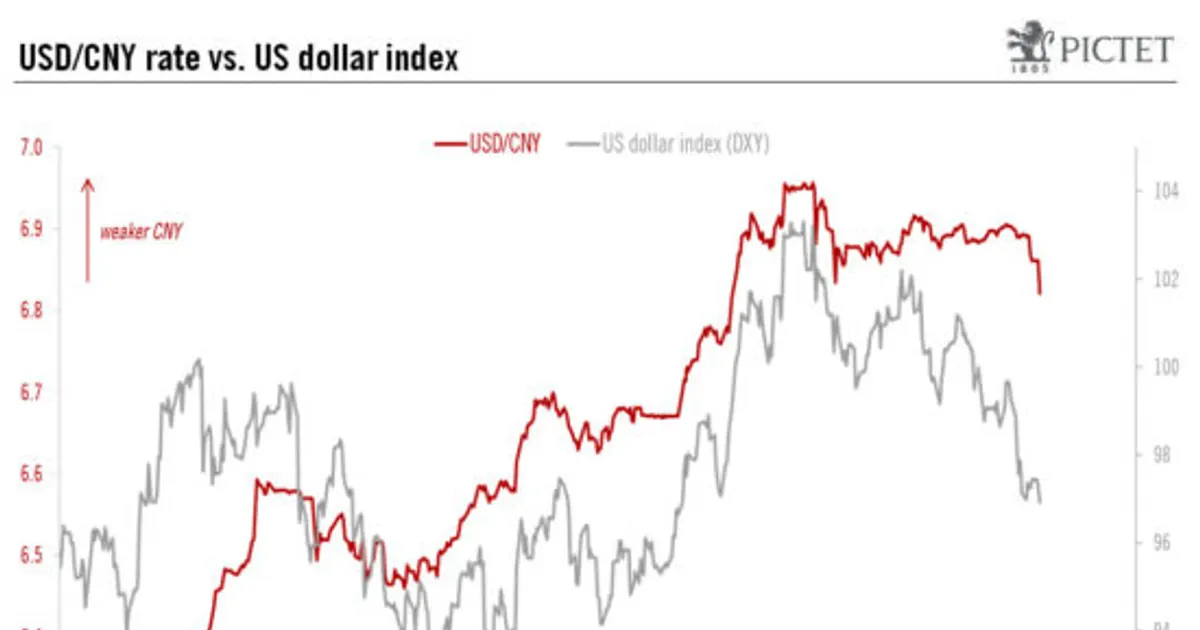
The People's Bank of China introduced a counter-cyclical adjustment factor into its daily USD/CNY reference rate calculation. The change adds a macroeconomic weighting to the fixing, giving the central bank more control over the exchange rate.
The move is designed to reduce pressure on the renminbi if the dollar strengthens again.
By limiting renminbi depreciation, the new fixing lowers the risk of a sudden cheapening of dollar-priced imports from China's perspective, which can otherwise slow Chinese purchases of US and Brazilian grains and meal. The policy shift reduces currency-driven volatility for feed importers.
 swiss.economicblogs.orgLuc Luyet &, Dong ChenJun 1, 2017
 farmprogress.comBob Burgdorfer Senior Editor, Farm FuturesJun 5, 2017
After 439 past neutral policy events, Corn moved a median +0.1% over 5 sessions (51% higher; middle half -1.3% to +1.2%), and +1.1% over 20.
After 554 past neutral policy events, Soybeans moved a median +0.0% over 5 sessions (51% higher; middle half -1.4% to +1.6%), and +0.6% over 20.
Not enough comparable past events yet for a historical read.
After 50 past bearish policy events, Chinese Yuan (CNY per USD) moved a median -0.1% over 5 sessions (46% higher; middle half -0.4% to +0.4%), and -0.0% over 20.
Moves of each commodity's benchmark from the last close before the event. Historical reads pool past events of the same kind; they describe what happened, not what will. Not investment advice.
The new fixing mechanism limits depreciation pressure and gives the central bank more control, supporting the yuan.
