Loading…
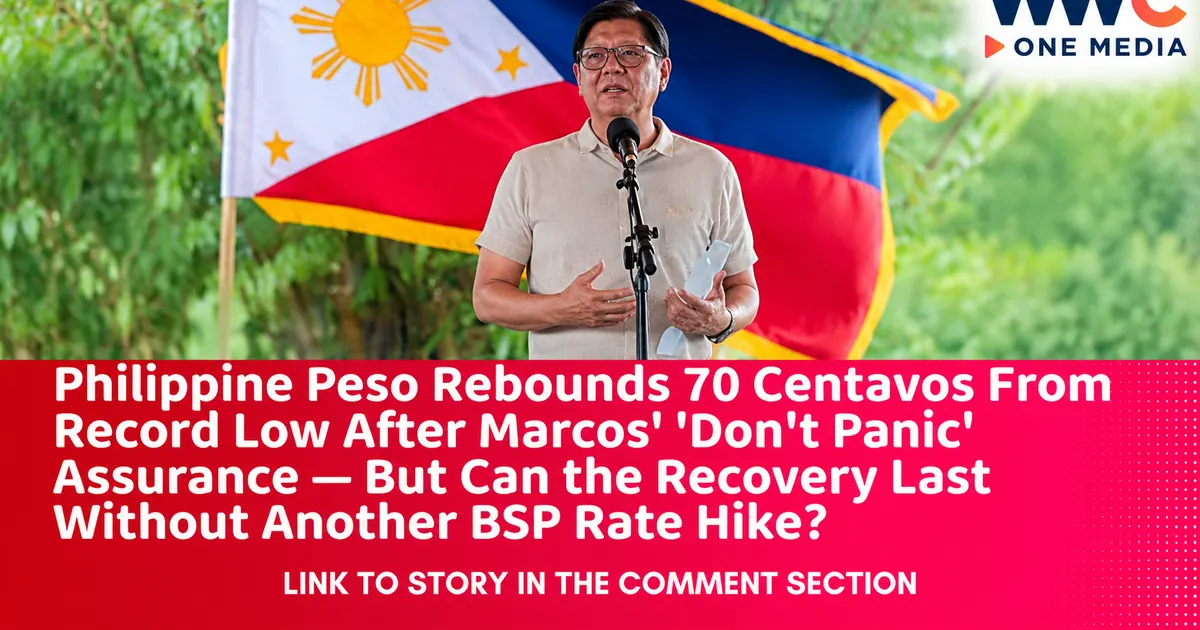
The Philippine peso recovered 70 centavos from its record closing low after President Marcos urged calm and assured markets the government could defend the currency. The peso closed at ₱63.47 per dollar on November 3, versus a record low of ₱64.17 on October 27.
A former central bank official warned the rebound may be temporary unless inflation, oil imports, trade deficits and investor confidence are addressed.
A weaker peso raises the local cost of imported feed ingredients and fuel, squeezing Philippine feed millers and livestock producers. Sustained currency pressure would keep import costs elevated even if global grain prices ease.
 wwconemedia.comWWC DESK MarielNov 4, 2026
Not enough comparable past events yet for a historical read.
Moves of each commodity's benchmark from the last close before the event. Historical reads pool past events of the same kind; they describe what happened, not what will. Not investment advice.
