Loading…
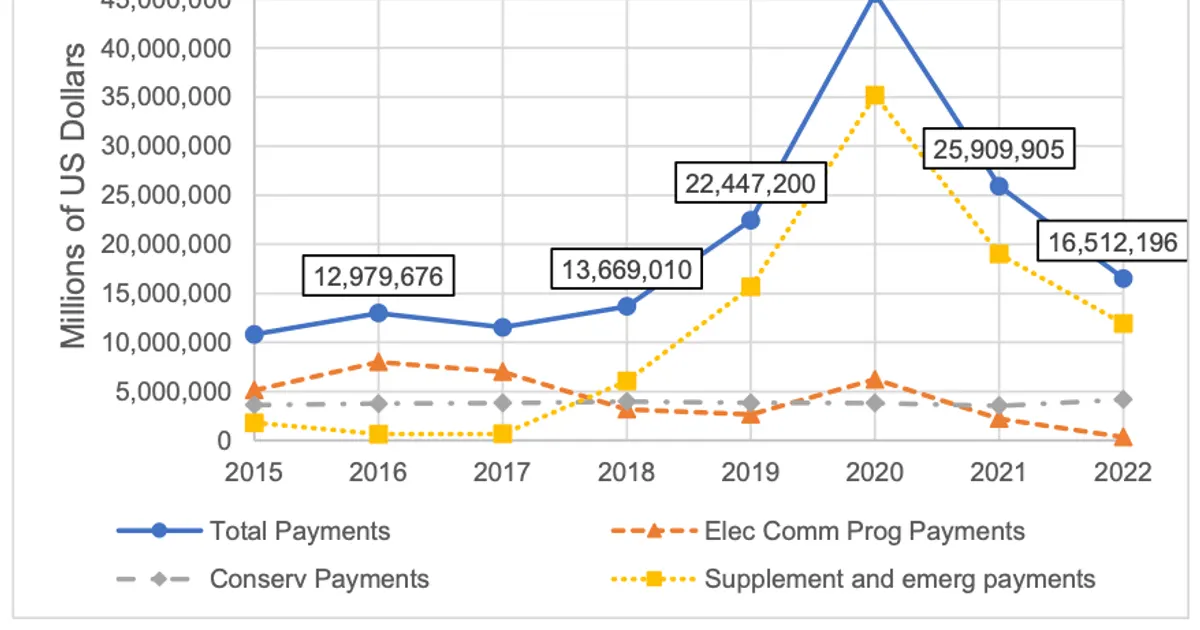
Purdue economists note the 2018 farm bill expires at the end of September 2023, leaving a short window to reauthorize or extend it amid divided government. They point to large ad hoc and emergency government payments to farms, which peaked in 2020 at over $45 billion.
Farm policy and safety-net design shape how much support producers receive and how much they plant, which feeds into feed grain supply over time. The outcome is uncertain, so the direct price effect on feed commodities is limited for now.
 ag.purdue.eduJan 10, 2023
After 1,623 past policy events, Corn moved a median +0.1% over 5 sessions (51% higher; middle half -1.4% to +1.5%), and +0.4% over 20.
After 1,905 past policy events, Soybeans moved a median +0.1% over 5 sessions (52% higher; middle half -1.4% to +1.8%), and +0.2% over 20.
After 1,019 past policy events, Wheat (SRW) moved a median -0.1% over 5 sessions (49% higher; middle half -1.7% to +1.5%), and +0.2% over 20.
Moves of each commodity's benchmark from the last close before the event. Historical reads pool past events of the same kind; they describe what happened, not what will. Not investment advice.
