Đang tải…
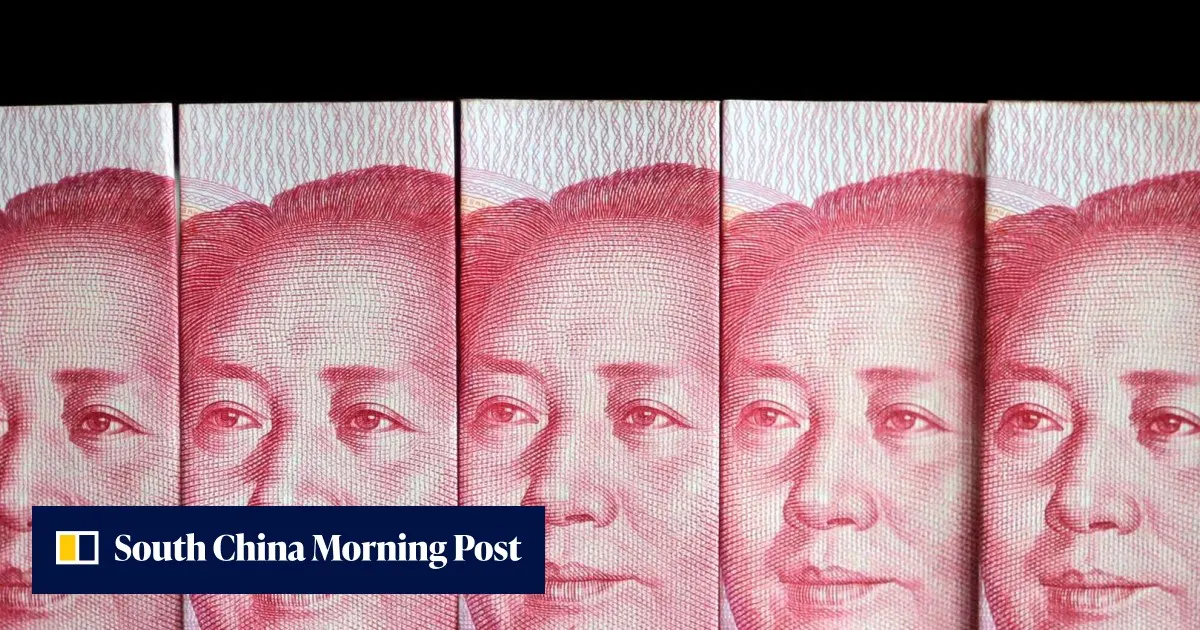
The yuan slid to a seven-year low after the People's Bank of China lowered its reference rate for a seventh consecutive trading day. The decline came as the dollar extended its post-election rally to a one-year high.
A persistently weaker yuan raises the dollar cost of Chinese imports and signals policy tolerance for depreciation, which can weigh on demand for U.S. feed commodities and support a stronger dollar.
 scmp.comCelia Chen14 thg 11, 2016
Sau 398 sự kiện vĩ mô tăng giá trước đây, Nhân dân tệ (CNY trên USD) biến động trung vị +0,0% trong 5 phiên (tăng 56%; nửa giữa từ -0,3% đến +0,5%), và +0,0% trong 20 phiên.
Sau 2.356 sự kiện vĩ mô tăng giá trước đây, Đô la Mỹ (diện rộng) biến động trung vị +0,2% trong 5 phiên (tăng 60%; nửa giữa từ -0,3% đến +0,7%), và +0,4% trong 20 phiên.
Biến động benchmark của từng hàng hóa so với giá đóng cửa trước sự kiện. Số liệu lịch sử gộp các sự kiện cùng loại trong quá khứ; chúng mô tả điều đã xảy ra, không phải điều sẽ xảy ra. Không phải tư vấn đầu tư.
Same-day report of the yuan sliding to a seven-year low after the PBOC lowered its reference rate for a seventh straight day, directly describing the 14 Nov move via policy-driven currency weakness and dollar strength.
On Nov 14 the yuan hit a seven-year low as the PBOC lowered its reference rate for a seventh straight day and the dollar extended its rally, directly contributing to the end-of-window move.
The post-election dollar rally extended to a one-year high on 11/14 as the yuan fell, showing broad dollar strength.
