Đang tải…
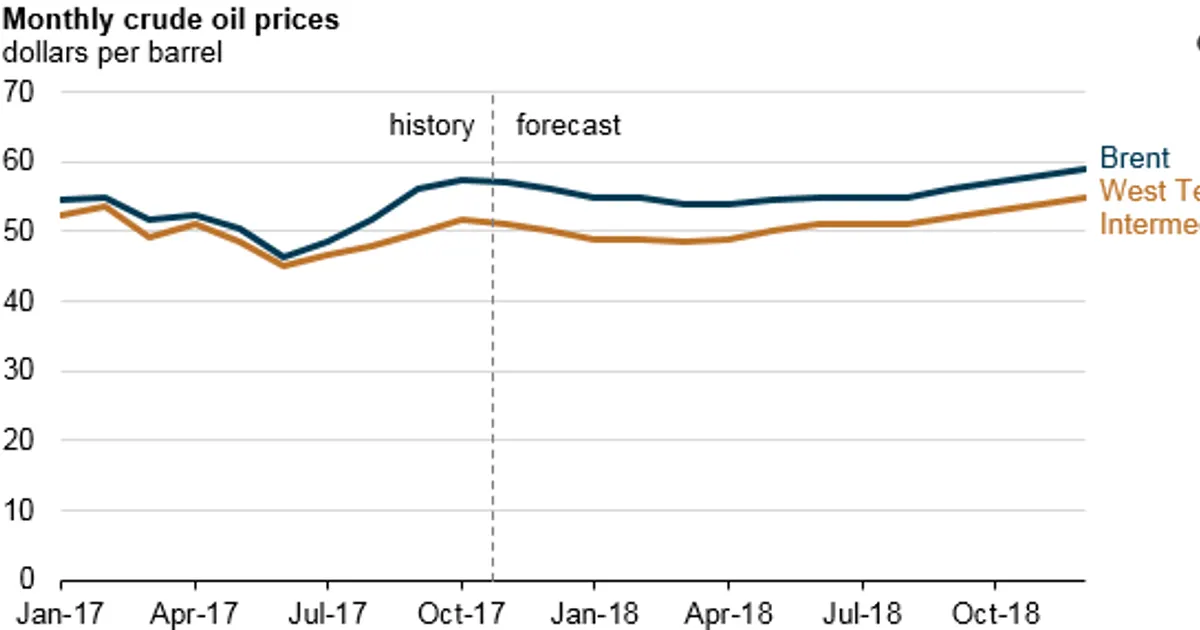
The EIA's November outlook forecasts the Brent-WTI spread at $6 per barrel through the first quarter of 2018, narrowing to $4 in the second half of 2018. The wider spread reflects transport bottlenecks moving crude from Cushing and the Permian basin to the U.S. Gulf Coast.
WTI averaged $6 below Brent in September and October.
Pipeline constraints keep inland U.S. crude discounted to Brent, which weighs on WTI-linked prices while Brent stays firmer. The effect on feed markets is indirect, through energy and biofuel input costs.
 eia.govU.S. Energy Information Administration (EIA) (.gov)1 thg 12, 2017
Sau 19 sự kiện hậu cần giảm giá trước đây, Dầu thô (WTI) biến động trung vị -1,5% trong 5 phiên (tăng 37%; nửa giữa từ -6,6% đến +2,3%), và +5,3% trong 20 phiên.
Sau 22 sự kiện hậu cần tăng giá trước đây, Dầu thô (Brent) biến động trung vị -0,7% trong 5 phiên (tăng 45%; nửa giữa từ -5,7% đến +4,5%), và -1,2% trong 20 phiên.
Biến động benchmark của từng hàng hóa so với giá đóng cửa trước sự kiện. Số liệu lịch sử gộp các sự kiện cùng loại trong quá khứ; chúng mô tả điều đã xảy ra, không phải điều sẽ xảy ra. Không phải tư vấn đầu tư.
