Đang tải…
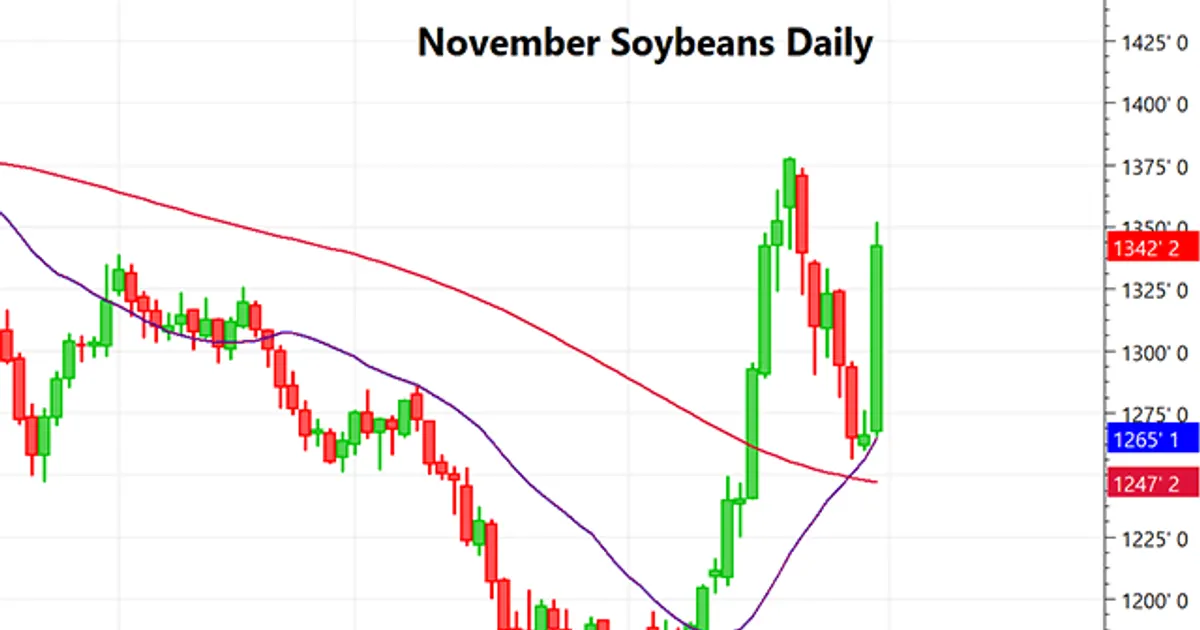
November soybean futures jumped after USDA's June stocks and acreage reports showed soybean plantings about 4 million acres below March intentions. Corn June 1 stocks came in at 4.106 billion bushels, the lowest since 2013-14, and corn plantings were 94.1 million acres, well above trade estimates.
The soybean acreage shortfall and tighter corn stocks support prices for both crops, with lower soybean supplies adding support to meal and oil.
 dtnpf.comDana Mantini30 thg 6, 2023
Sau 747 sự kiện báo cáo tăng giá trước đây, Đậu tương biến động trung vị +0,3% trong 5 phiên (tăng 54%; nửa giữa từ -1,4% đến +2,1%), và +0,8% trong 20 phiên.
Sau 414 sự kiện báo cáo tăng giá trước đây, Khô đậu tương biến động trung vị -0,1% trong 5 phiên (tăng 48%; nửa giữa từ -2,1% đến +2,3%), và +0,3% trong 20 phiên.
Sau 770 sự kiện báo cáo trung lập trước đây, Ngô biến động trung vị +0,2% trong 5 phiên (tăng 54%; nửa giữa từ -1,1% đến +1,6%), và +0,7% trong 20 phiên.
Biến động benchmark của từng hàng hóa so với giá đóng cửa trước sự kiện. Số liệu lịch sử gộp các sự kiện cùng loại trong quá khứ; chúng mô tả điều đã xảy ra, không phải điều sẽ xảy ra. Không phải tư vấn đầu tư.
The June 30 Acreage report showed corn plantings of 94.1 million acres, well above trade estimates, which is bearish for supply and likely drove the sharp drop, partly offset by low June 1 stocks.
The USDA June Acreage report (soybean plantings ~4M acres below March intentions) is the likely cause of the soybean surge, but it was released 2023-06-30, after the move window ending 06/29, so this is only a possible link via pre-report positioning.
