กำลังโหลด…
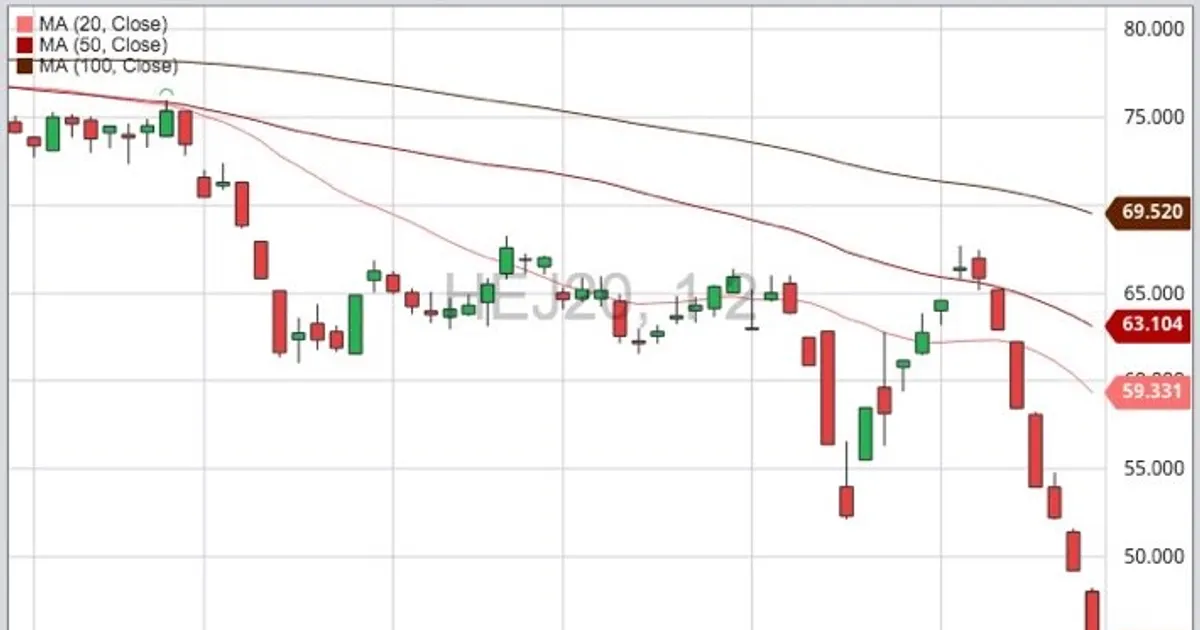
U.S. hog futures fell to a 3-1/2 year low on April 2, 2020 while live and feeder cattle dropped by daily limits amid recession fears and surging unemployment from the coronavirus pandemic. April lean hogs settled at 44.7 cents/lb, the lowest spot level since October 2016.
Packers slowed meat output as demand weakened and cash prices faded.
Demand destruction from restaurant closures and stay-at-home orders is outpacing supply adjustments, pushing livestock prices lower and weakening feeder demand for feed grains and meals.
 grainews.caGFM Network News2 เม.ย. 2563
หลัง 117 เหตุการณ์โรคระบาดที่ขาลงในอดีต สุกรเนื้อแดง เคลื่อนไหวเฉลี่ย -0.6% ใน 5 วันทำการ (36% สูงขึ้น; ช่วงกลาง -2.2% ถึง +1.6%) และ +1.2% ใน 20 วัน.
หลัง 70 เหตุการณ์โรคระบาดที่ขาลงในอดีต โคมีชีวิต เคลื่อนไหวเฉลี่ย +0.0% ใน 5 วันทำการ (51% สูงขึ้น; ช่วงกลาง -1.7% ถึง +1.0%) และ +0.4% ใน 20 วัน.
หลัง 46 เหตุการณ์โรคระบาดที่ขาลงในอดีต โคขุน (Feeder) เคลื่อนไหวเฉลี่ย +0.3% ใน 5 วันทำการ (54% สูงขึ้น; ช่วงกลาง -2.3% ถึง +1.6%) และ +1.8% ใน 20 วัน.
การเคลื่อนไหวของราคาอ้างอิงของแต่ละสินค้านับจากการปิดตลาดครั้งสุดท้ายก่อนเหตุการณ์ ข้อมูลย้อนหลังรวมเหตุการณ์ชนิดเดียวกันในอดีต ซึ่งบอกสิ่งที่เกิดขึ้น ไม่ได้บอกสิ่งที่จะเกิด ไม่ใช่คำแนะนำการลงทุน
Hog futures hit a 3.5-year low on April 2 as recession fears, surging unemployment and weaker packer demand drove the selloff, directly matching the move window.
Hog futures hit a 3.5-year low on April 2 amid recession fears, slowed packer output and weaker demand, directly capturing the week's crash.
Live and feeder cattle fell by daily limits on April 2 amid recession fears and unemployment, with packers slowing output on weaker demand.
Cattle limit-down on April 2 amid recession fears and surging unemployment, with packers slowing output as demand weakened.
Limit-down live and feeder cattle on April 2 amid recession fears and packers slowing output weakened demand for fed cattle.
