Carregando…
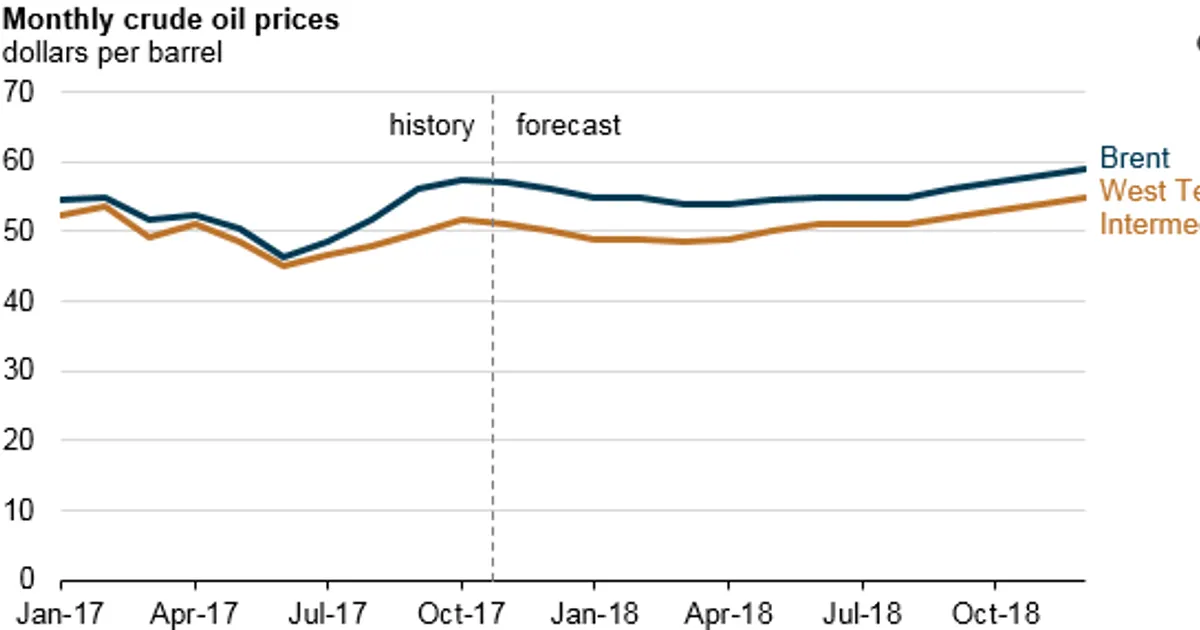
The EIA's November outlook forecasts the Brent-WTI spread at $6 per barrel through the first quarter of 2018, narrowing to $4 in the second half of 2018. The wider spread reflects transport bottlenecks moving crude from Cushing and the Permian basin to the U.S. Gulf Coast.
WTI averaged $6 below Brent in September and October.
Pipeline constraints keep inland U.S. crude discounted to Brent, which weighs on WTI-linked prices while Brent stays firmer. The effect on feed markets is indirect, through energy and biofuel input costs.
 eia.govU.S. Energy Information Administration (EIA) (.gov)1 de dez. de 2017
Após 19 eventos baixista de logística passados, Petróleo (WTI) subiu em mediana -1,5% em 5 sessões (37% de alta; metade central de -6,6% a +2,3%), e +5,3% em 20.
Após 22 eventos altista de logística passados, Petróleo (Brent) subiu em mediana -0,7% em 5 sessões (45% de alta; metade central de -5,7% a +4,5%), e -1,2% em 20.
Variações do benchmark de cada commodity desde o último fechamento antes do evento. As leituras históricas agregam eventos passados do mesmo tipo; descrevem o que aconteceu, não o que vai acontecer. Não é recomendação de investimento.
