Laden…
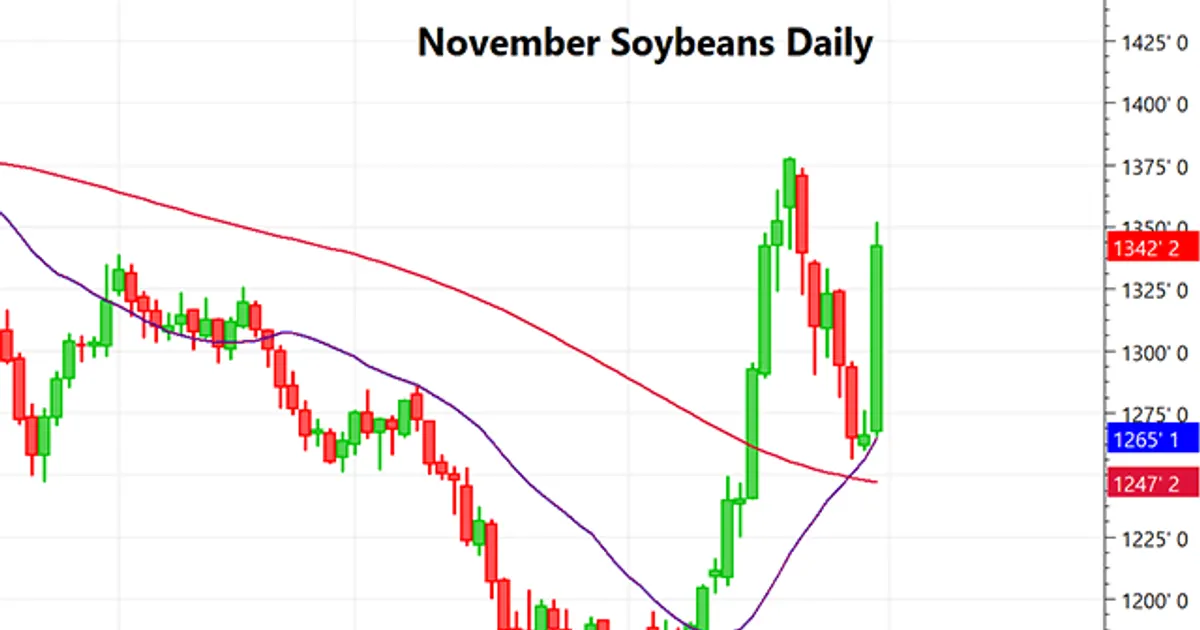
November soybean futures jumped after USDA's June stocks and acreage reports showed soybean plantings about 4 million acres below March intentions. Corn June 1 stocks came in at 4.106 billion bushels, the lowest since 2013-14, and corn plantings were 94.1 million acres, well above trade estimates.
The soybean acreage shortfall and tighter corn stocks support prices for both crops, with lower soybean supplies adding support to meal and oil.
 dtnpf.comDana Mantini30 jun 2023
Na 747 eerdere opwaarts rapport-gebeurtenissen bewoog Sojabonen zich mediaan +0,3% over 5 sessies (54% hoger; middelste helft -1,4% tot +2,1%), en +0,8% over 20.
Na 414 eerdere opwaarts rapport-gebeurtenissen bewoog Sojaschroot zich mediaan -0,1% over 5 sessies (48% hoger; middelste helft -2,1% tot +2,3%), en +0,3% over 20.
Na 770 eerdere neutraal rapport-gebeurtenissen bewoog Maïs zich mediaan +0,2% over 5 sessies (54% hoger; middelste helft -1,1% tot +1,6%), en +0,7% over 20.
Bewegingen van de benchmark van elke grondstof sinds de laatste slotkoers vóór de gebeurtenis. Historische waarden bundelen eerdere gebeurtenissen van hetzelfde soort; ze beschrijven wat er gebeurde, niet wat zal gebeuren. Geen beleggingsadvies.
The June 30 Acreage report showed corn plantings of 94.1 million acres, well above trade estimates, which is bearish for supply and likely drove the sharp drop, partly offset by low June 1 stocks.
The USDA June Acreage report (soybean plantings ~4M acres below March intentions) is the likely cause of the soybean surge, but it was released 2023-06-30, after the move window ending 06/29, so this is only a possible link via pre-report positioning.
