불러오는 중…
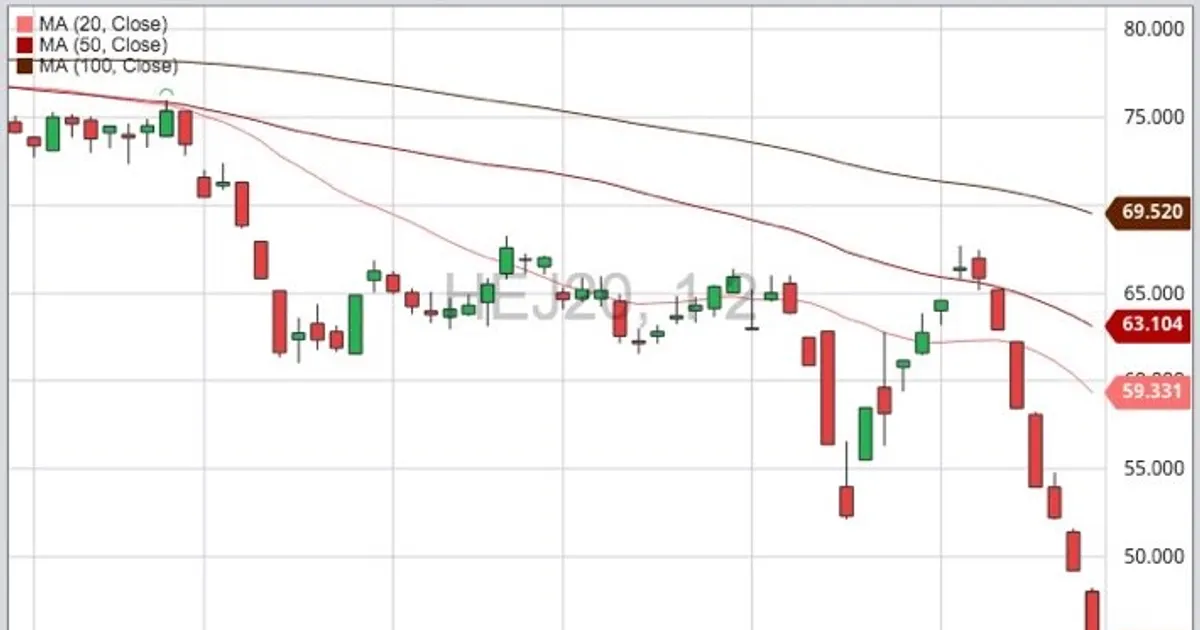
U.S. hog futures fell to a 3-1/2 year low on April 2, 2020 while live and feeder cattle dropped by daily limits amid recession fears and surging unemployment from the coronavirus pandemic. April lean hogs settled at 44.7 cents/lb, the lowest spot level since October 2016.
Packers slowed meat output as demand weakened and cash prices faded.
Demand destruction from restaurant closures and stay-at-home orders is outpacing supply adjustments, pushing livestock prices lower and weakening feeder demand for feed grains and meals.
 grainews.caGFM Network News2020. 4. 2.
과거 하락 질병 이벤트 117건 이후, 돈육 (Lean Hogs)은 5거래일 동안 중앙값 -0.6% 변동(상승 36%; 중간 50% 범위 -2.2%~+1.6%), 20거래일 동안 +1.2%.
과거 하락 질병 이벤트 70건 이후, 생우은 5거래일 동안 중앙값 +0.0% 변동(상승 51%; 중간 50% 범위 -1.7%~+1.0%), 20거래일 동안 +0.4%.
과거 하락 질병 이벤트 46건 이후, 비육용 소은 5거래일 동안 중앙값 +0.3% 변동(상승 54%; 중간 50% 범위 -2.3%~+1.6%), 20거래일 동안 +1.8%.
각 품목 벤치마크의 이벤트 직전 종가 대비 변동. 과거 수치는 같은 유형의 과거 이벤트를 합산한 것으로, 일어난 일을 설명할 뿐 앞으로 일어날 일이 아닙니다. 투자 자문이 아닙니다.
Hog futures hit a 3.5-year low on April 2 as recession fears, surging unemployment and weaker packer demand drove the selloff, directly matching the move window.
Hog futures hit a 3.5-year low on April 2 amid recession fears, slowed packer output and weaker demand, directly capturing the week's crash.
Live and feeder cattle fell by daily limits on April 2 amid recession fears and unemployment, with packers slowing output on weaker demand.
Cattle limit-down on April 2 amid recession fears and surging unemployment, with packers slowing output as demand weakened.
Limit-down live and feeder cattle on April 2 amid recession fears and packers slowing output weakened demand for fed cattle.
