読み込み中…
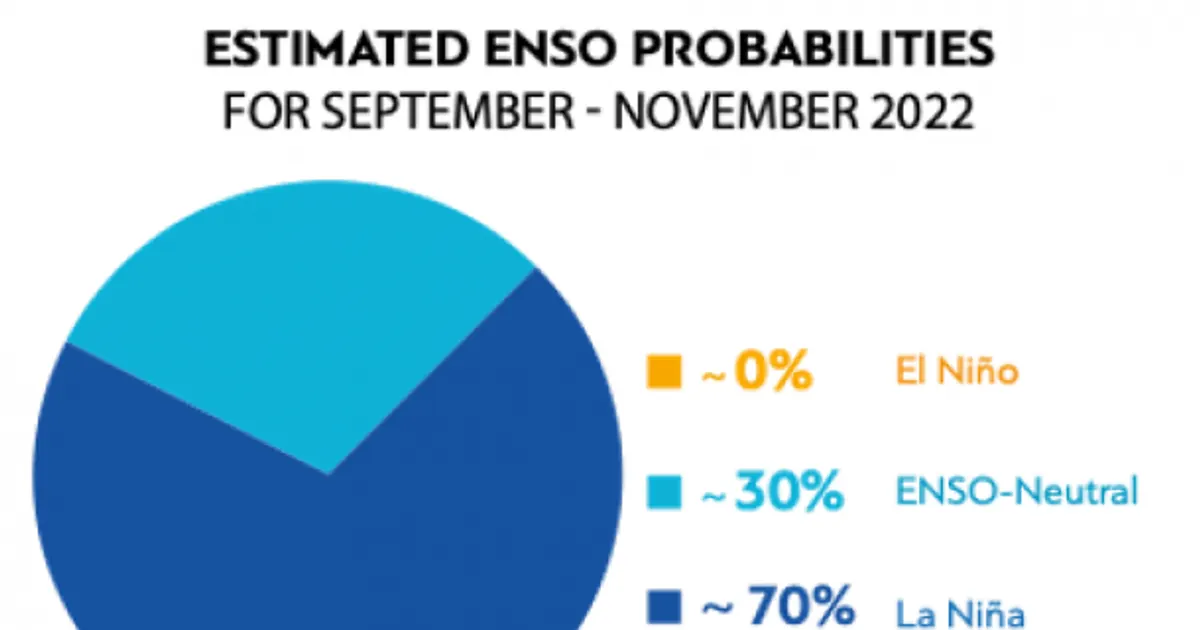
The World Meteorological Organization expects the current La Niña to persist through at least the end of 2022, making it the first triple-dip La Niña of the century. The chance of it continuing is 70 per cent for September to November, falling to 55 per cent for December to February.
Drought and flooding are being exacerbated in several regions.
A prolonged La Niña typically brings dryness to Argentina, southern Brazil and parts of the US Plains, which can cut South American soy and corn output and support global grain and oilseed prices.
 wmo.int2022/08/30
過去の強気な天候イベント1,079件の後、大豆 は5営業日で中央値 +0.3% 動き(54% が上昇。中央50%は -1.4% から +2.0%)、20営業日では +0.9% 動きました。
過去の強気な天候イベント1,465件の後、トウモロコシ は5営業日で中央値 +0.2% 動き(54% が上昇。中央50%は -1.4% から +1.9%)、20営業日では +0.9% 動きました。
過去の強気な天候イベント1,072件の後、小麦(SRW) は5営業日で中央値 +0.2% 動き(55% が上昇。中央50%は -1.4% から +2.3%)、20営業日では +0.3% 動きました。
イベント直前の終値からの各商品ベンチマークの動き。過去の傾向は同種の過去イベントをまとめたものであり、起きたことを示すもので、今後を示すものではありません。投資助言ではありません。
