Caricamento…
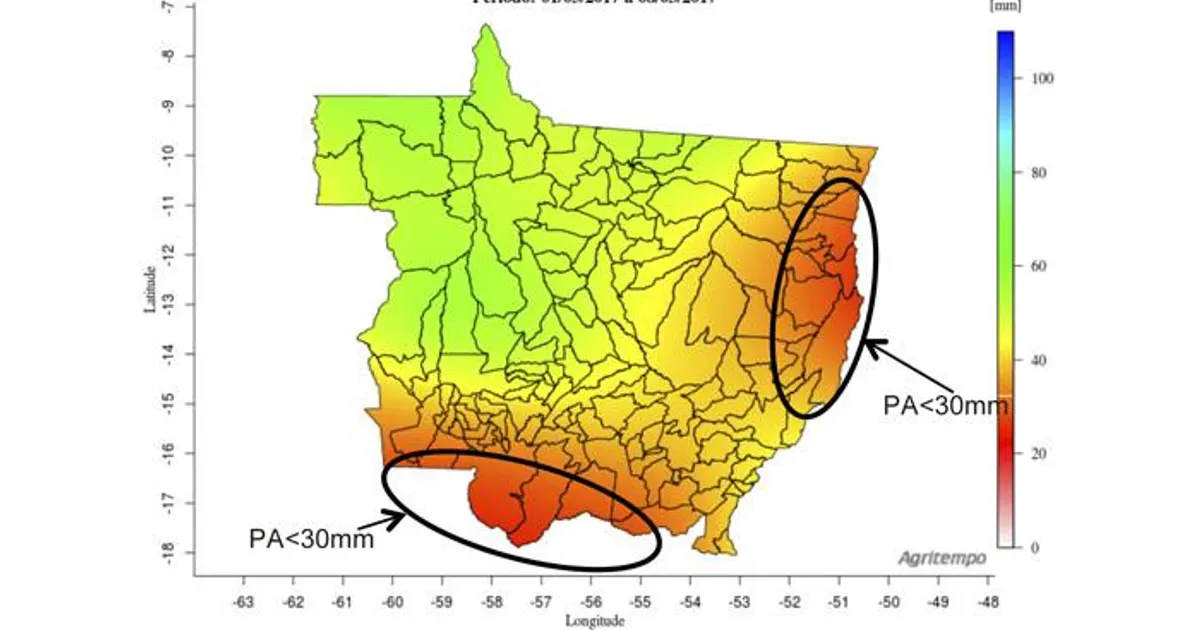
Embrapa's second agrometeorological bulletin for Mato Grosso shows rainfall from September to February was below the historical average but well distributed, supporting crop development. Heavy February rains caused losses in the southwest of the state where harvest could not proceed.
Rain also helped second-crop corn and cotton sown earlier.
Good soybean harvest conditions in Mato Grosso, Brazil's largest producing state, point to ample export supply and bearish pressure on soybean prices, with localized losses providing limited offset.
 revistacultivar.com14 mar 2017
Dopo 363 eventi meteo ribassista passati, Soia si è mosso in mediana di -0,6% in 5 sedute (42% in rialzo; metà centrale da -2,5% a +1,1%), e di -0,2% in 20.
Dopo 445 eventi meteo neutrale passati, Mais si è mosso in mediana di +0,1% in 5 sedute (52% in rialzo; metà centrale da -1,4% a +1,6%), e di +0,7% in 20.
Variazioni del benchmark di ciascuna materia prima rispetto all'ultima chiusura prima dell'evento. Le letture storiche raggruppano eventi passati dello stesso tipo; descrivono ciò che è accaduto, non ciò che accadrà. Non è consulenza di investimento.
