Caricamento…
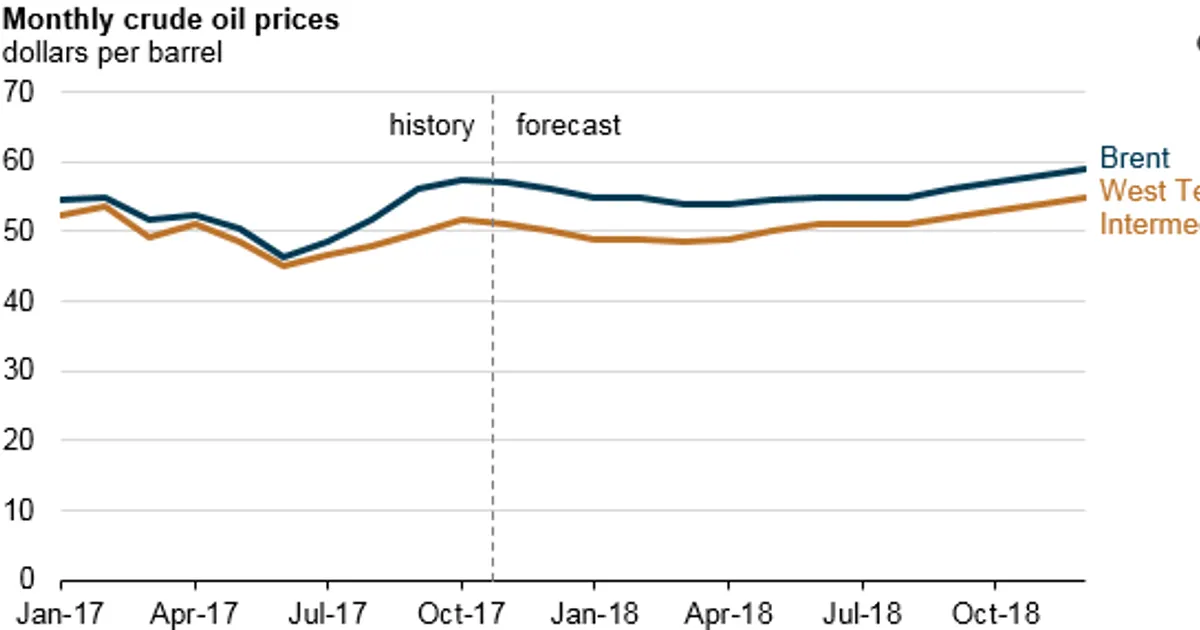
The EIA's November outlook forecasts the Brent-WTI spread at $6 per barrel through the first quarter of 2018, narrowing to $4 in the second half of 2018. The wider spread reflects transport bottlenecks moving crude from Cushing and the Permian basin to the U.S. Gulf Coast.
WTI averaged $6 below Brent in September and October.
Pipeline constraints keep inland U.S. crude discounted to Brent, which weighs on WTI-linked prices while Brent stays firmer. The effect on feed markets is indirect, through energy and biofuel input costs.
 eia.govU.S. Energy Information Administration (EIA) (.gov)1 dic 2017
Dopo 19 eventi logistica ribassista passati, Petrolio greggio (WTI) si è mosso in mediana di -1,5% in 5 sedute (37% in rialzo; metà centrale da -6,6% a +2,3%), e di +5,3% in 20.
Dopo 22 eventi logistica rialzista passati, Petrolio greggio (Brent) si è mosso in mediana di -0,7% in 5 sedute (45% in rialzo; metà centrale da -5,7% a +4,5%), e di -1,2% in 20.
Variazioni del benchmark di ciascuna materia prima rispetto all'ultima chiusura prima dell'evento. Le letture storiche raggruppano eventi passati dello stesso tipo; descrivono ciò che è accaduto, non ciò che accadrà. Non è consulenza di investimento.
