Caricamento…
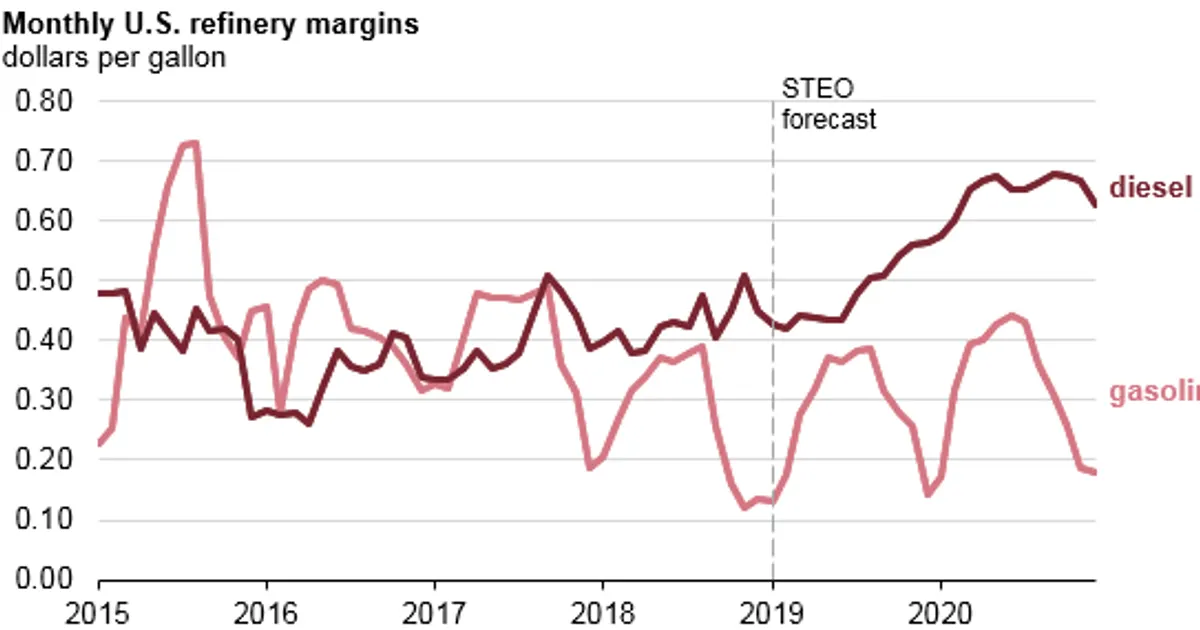
The EIA's January 2019 Short-Term Energy Outlook analyzes how IMO rules capping marine fuel sulfur at 0.5% from January 1, 2020 will affect markets. Refiners must either upgrade residual oil or process lighter crudes.
The agency expects upward pressure on diesel margins and modest upward pressure on crude prices in late 2019 and early 2020.
Ships shifting to low-sulfur distillate fuel should lift diesel and crude-linked energy costs, raising feed transport and drying costs for feed buyers. The effect is expected to be most acute in 2020 and fade afterward.
 eia.gov15 gen 2019
Dopo 109 eventi rapporto rialzista passati, ULSD / Gasolio si è mosso in mediana di +0,2% in 5 sedute (51% in rialzo; metà centrale da -3,3% a +3,9%), e di +0,3% in 20.
Dopo 131 eventi rapporto rialzista passati, Petrolio greggio (WTI) si è mosso in mediana di +1,2% in 5 sedute (60% in rialzo; metà centrale da -1,3% a +3,4%), e di +2,9% in 20.
Dopo 116 eventi rapporto rialzista passati, Petrolio greggio (Brent) si è mosso in mediana di +1,3% in 5 sedute (66% in rialzo; metà centrale da -1,0% a +3,1%), e di +2,0% in 20.
Variazioni del benchmark di ciascuna materia prima rispetto all'ultima chiusura prima dell'evento. Le letture storiche raggruppano eventi passati dello stesso tipo; descrivono ciò che è accaduto, non ciò che accadrà. Non è consulenza di investimento.
