Caricamento…
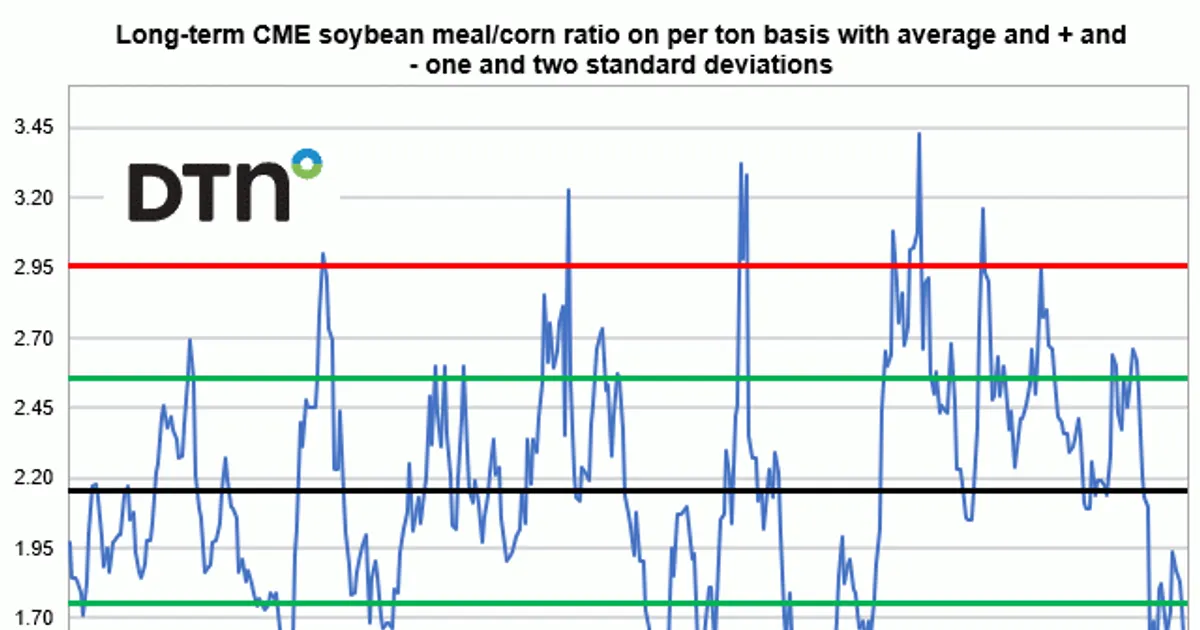
DTN analyst Joel Karlin compares the USDA's February outlook with the May WASDE, which cut 2022 U.S. corn production to 14.46 billion bushels on a 177 bpa yield and 89.5 million acres. The report raised U.S. soybean production to 4.64 billion bushels and forecast soybean meal prices down $20 to $400 per short ton.
Global 2022/23 corn output and stocks were lowered, while soybean output and stocks were raised.
A smaller U.S. corn crop and higher corn prices favor corn, while bigger soybean supplies and lower forecast meal prices weigh on soybeans and soymeal. For feed buyers, the shift makes soymeal relatively cheaper against corn.
 dtnpf.comJoel Karlin19 mag 2022
Dopo 1040 eventi rapporto rialzista passati, Mais si è mosso in mediana di +0,5% in 5 sedute (62% in rialzo; metà centrale da -0,9% a +2,0%), e di +0,8% in 20.
Dopo 788 eventi rapporto ribassista passati, Soia si è mosso in mediana di -0,3% in 5 sedute (47% in rialzo; metà centrale da -2,0% a +1,5%), e di -0,9% in 20.
Dopo 399 eventi rapporto ribassista passati, Farina di soia si è mosso in mediana di -0,4% in 5 sedute (44% in rialzo; metà centrale da -2,4% a +1,2%), e di -1,0% in 20.
Variazioni del benchmark di ciascuna materia prima rispetto all'ultima chiusura prima dell'evento. Le letture storiche raggruppano eventi passati dello stesso tipo; descrivono ciò che è accaduto, non ciò che accadrà. Non è consulenza di investimento.
