Caricamento…
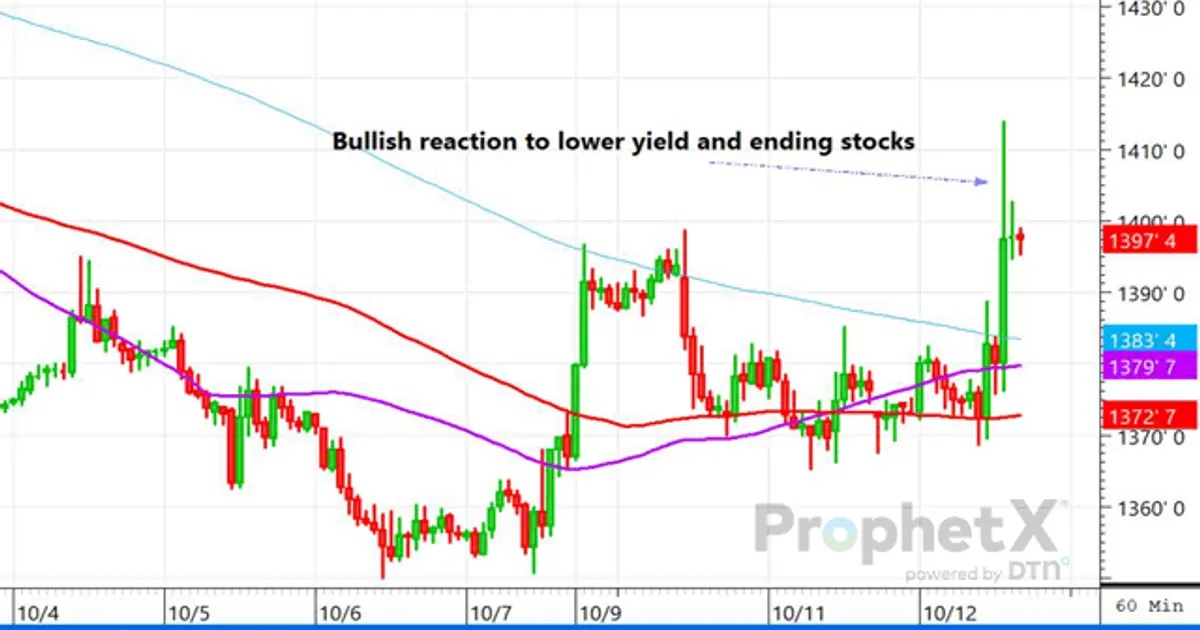
DTN reported that soybeans jumped after USDA's October WASDE set the soybean yield at a surprisingly low 49.8 bushels per acre, leading to lower-than-expected ending stocks. USDA also cut corn and wheat demand because of slow exports, river problems, and the effects of global recession and high interest rates.
Corn was described as mostly a dud, with ending stocks slightly above expectations.
The yield surprise tightens soybean supply and supports soybean meal and oil values. Lower corn and wheat demand estimates keep those markets under pressure.
 dtnpf.com12 ott 2022
Dopo 747 eventi rapporto rialzista passati, Soia si è mosso in mediana di +0,3% in 5 sedute (54% in rialzo; metà centrale da -1,4% a +2,1%), e di +0,8% in 20.
Dopo 1102 eventi rapporto ribassista passati, Mais si è mosso in mediana di -0,2% in 5 sedute (47% in rialzo; metà centrale da -1,8% a +1,3%), e di +0,0% in 20.
Dopo 1006 eventi rapporto ribassista passati, Frumento (SRW) si è mosso in mediana di +0,0% in 5 sedute (50% in rialzo; metà centrale da -1,6% a +1,8%), e di +0,3% in 20.
Variazioni del benchmark di ciascuna materia prima rispetto all'ultima chiusura prima dell'evento. Le letture storiche raggruppano eventi passati dello stesso tipo; descrivono ciò che è accaduto, non ciò che accadrà. Non è consulenza di investimento.
