Caricamento…
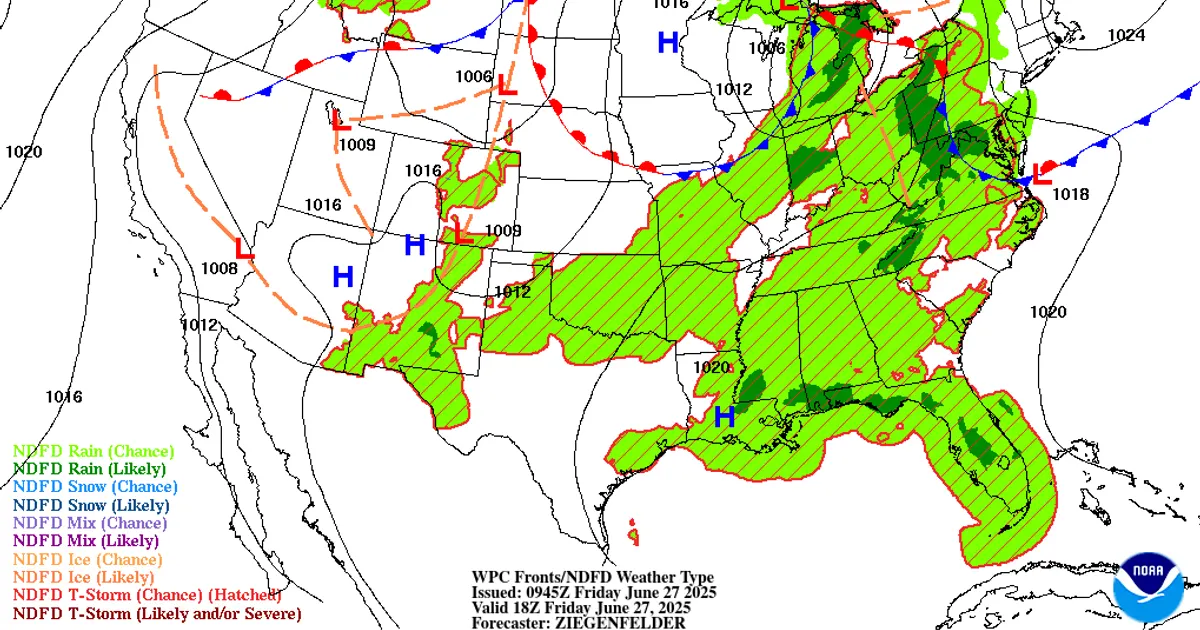
Scattered showers and thunderstorms covered parts of the Corn Belt, and many Midwest production areas had ample soil moisture. As of June 22, 4% of corn was silking and 8% of soybeans were blooming, while winter wheat harvest was behind the five-year average at 19%.
Adequate soil moisture during early reproductive stages supports yield prospects and limits weather-driven price spikes. Slow wheat harvest progress is a minor supply-timing factor.
 brownfieldagnews.comGreg Soulje27 giu 2025
Dopo 357 eventi meteo ribassista passati, Mais si è mosso in mediana di -0,3% in 5 sedute (44% in rialzo; metà centrale da -2,2% a +1,3%), e di -0,5% in 20.
Dopo 324 eventi meteo neutrale passati, Soia si è mosso in mediana di +0,0% in 5 sedute (52% in rialzo; metà centrale da -1,4% a +1,7%), e di +0,7% in 20.
Dopo 29 eventi meteo neutrale passati, Frumento (HRW) si è mosso in mediana di +0,6% in 5 sedute (52% in rialzo; metà centrale da -1,9% a +2,3%), e di -0,7% in 20.
Variazioni del benchmark di ciascuna materia prima rispetto all'ultima chiusura prima dell'evento. Le letture storiche raggruppano eventi passati dello stesso tipo; descrivono ciò che è accaduto, non ciò che accadrà. Non è consulenza di investimento.
Ample Corn Belt soil moisture and an active rainy pattern going into pollination supported good yield prospects, which weighs on prices.
