Memuat…
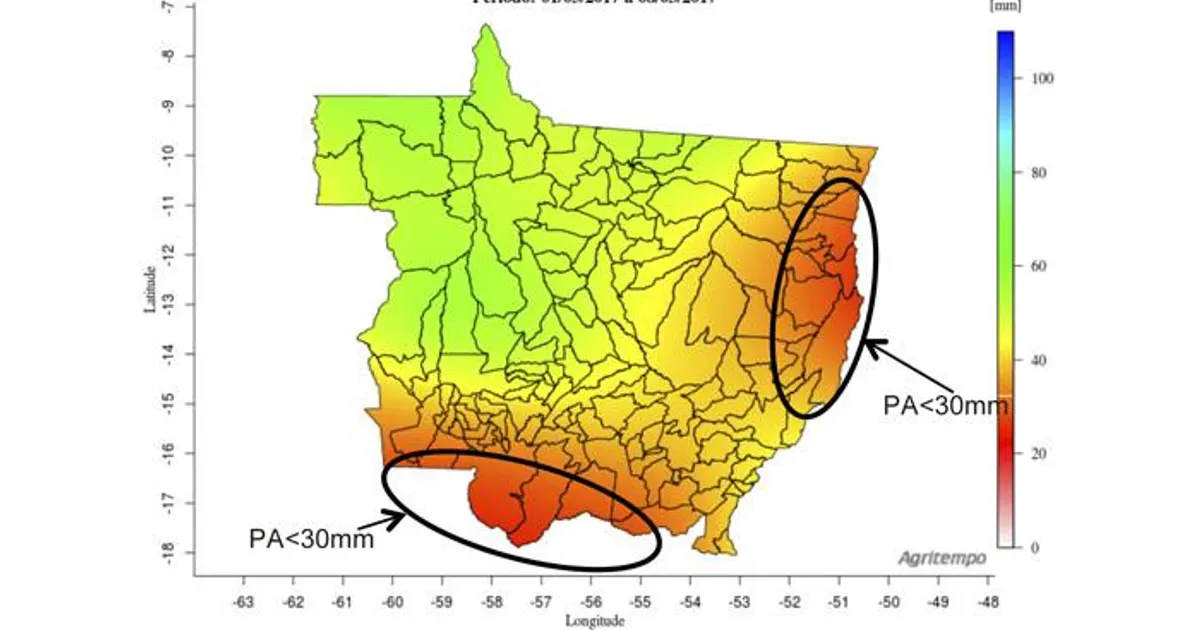
Embrapa's second agrometeorological bulletin for Mato Grosso shows rainfall from September to February was below the historical average but well distributed, supporting crop development. Heavy February rains caused losses in the southwest of the state where harvest could not proceed.
Rain also helped second-crop corn and cotton sown earlier.
Good soybean harvest conditions in Mato Grosso, Brazil's largest producing state, point to ample export supply and bearish pressure on soybean prices, with localized losses providing limited offset.
 revistacultivar.com14 Mar 2017
Setelah 363 peristiwa cuaca bearish sebelumnya, Kedelai bergerak median -0,6% selama 5 sesi (42% lebih tinggi; separuh tengah -2,5% sampai +1,1%), dan -0,2% selama 20 sesi.
Setelah 445 peristiwa cuaca netral sebelumnya, Jagung bergerak median +0,1% selama 5 sesi (52% lebih tinggi; separuh tengah -1,4% sampai +1,6%), dan +0,7% selama 20 sesi.
Pergerakan benchmark setiap komoditas dari penutupan terakhir sebelum peristiwa. Pembacaan historis menggabungkan peristiwa serupa di masa lalu; itu menggambarkan apa yang terjadi, bukan apa yang akan terjadi. Bukan nasihat investasi.
