Memuat…
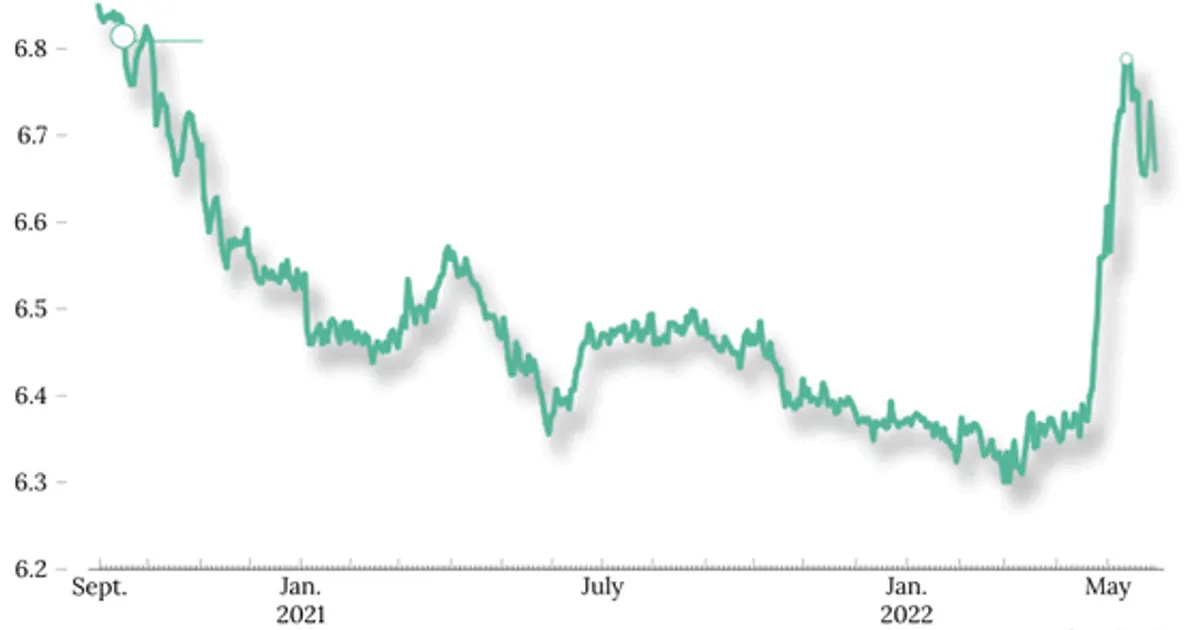
The Chinese yuan has weakened sharply against the dollar after appreciating since June 2020. Analysts had expected the gains to fade once the Federal Reserve began raising rates, but China's worst Covid-19 outbreak since early 2020 and widespread lockdowns have worsened its economic slowdown.
A weaker yuan raises the cost of imported feed ingredients for Chinese buyers while the slowdown cuts demand for meat and feed, pressuring import prices for grains and meals.
 caixinglobal.comPeng Qinqin, Wang Shiyu, Kelsey Cheng31 Mei 2022
Setelah 398 peristiwa makro bullish sebelumnya, Yuan Tiongkok (CNY per USD) bergerak median +0,0% selama 5 sesi (56% lebih tinggi; separuh tengah -0,3% sampai +0,5%), dan +0,0% selama 20 sesi.
Setelah 117 peristiwa makro bearish sebelumnya, Bungkil Kedelai bergerak median -0,6% selama 5 sesi (41% lebih tinggi; separuh tengah -2,5% sampai +1,7%), dan +0,5% selama 20 sesi.
Pergerakan benchmark setiap komoditas dari penutupan terakhir sebelum peristiwa. Pembacaan historis menggabungkan peristiwa serupa di masa lalu; itu menggambarkan apa yang terjadi, bukan apa yang akan terjadi. Bukan nasihat investasi.
