Chargement…
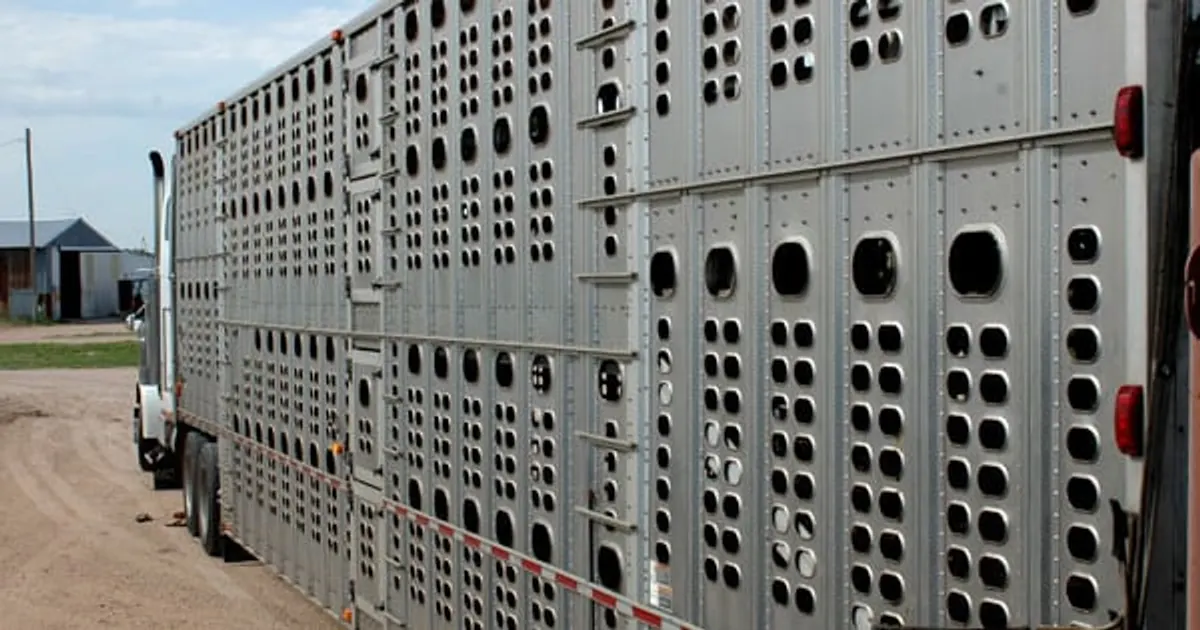
The Tyson Foods Finney County beef plant in Holcomb, Kansas, was partly destroyed by fire on August 10, and cattle futures fell limit down on the Monday after. Analysts estimated the lost slaughter capacity at roughly 30,000 head per week, about 6% of U.S. fed cattle packing capacity.
The plant accounted for about 23.5% of Kansas fed cattle packing capacity.
The loss of weekly slaughter capacity disrupts both fed cattle and boxed beef markets, adding logistics costs for rerouting cattle and beef. Those costs and the shortfall in packing capacity weigh on live cattle and feeder cattle prices.
 beefmagazine.comWes Ishmael13 août 2019
Après 29 événements logistique baissier passés, Bovins vivants a varié en médiane de -0,3 % sur 5 séances (38 % de hausses ; moitié centrale de -2,0 % à +0,5 %), et de -3,7 % sur 20.
Après 20 événements logistique baissier passés, Bovins d'engraissement a varié en médiane de +1,3 % sur 5 séances (60 % de hausses ; moitié centrale de -0,7 % à +2,0 %), et de +2,1 % sur 20.
Variations du benchmark de chaque matière depuis la dernière clôture avant l'événement. Les lectures historiques regroupent les événements passés de même nature ; elles décrivent ce qui s'est passé, pas ce qui arrivera. Ceci n'est pas un conseil en investissement.
The Aug 10 Tyson Holcomb plant fire removed roughly 6% of U.S. fed cattle packing capacity, cutting demand for cattle and sending futures limit down on Monday Aug 12, which directly explains the feeder cattle drop.
Tyson Holcomb fire removed roughly 6% of US fed cattle packing capacity, and live cattle futures went limit down, which directly explains the 5-day drop.
The Aug 10 Tyson Holcomb plant fire removed roughly 6% of US fed cattle packing capacity, and futures went limit down on Monday Aug 12, so reduced slaughter demand for live cattle explains the drop.
The Tyson Holcomb plant fire removed roughly 6% of U.S. fed cattle packing capacity, which cut packer demand for cattle and pushed futures limit down, so feeder cattle fell sharply.
