Cargando…
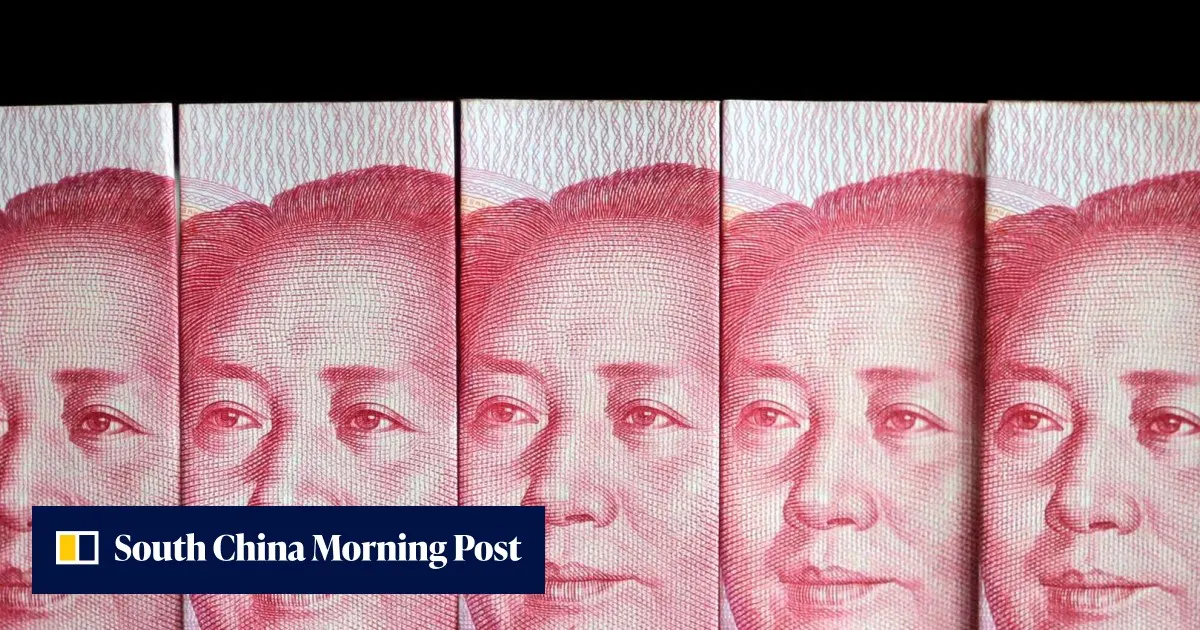
The yuan slid to a seven-year low after the People's Bank of China lowered its reference rate for a seventh consecutive trading day. The decline came as the dollar extended its post-election rally to a one-year high.
A persistently weaker yuan raises the dollar cost of Chinese imports and signals policy tolerance for depreciation, which can weigh on demand for U.S. feed commodities and support a stronger dollar.
 scmp.comCelia Chen14 nov 2016
Tras 398 eventos alcista de macro pasados, Yuan chino (CNY por USD) se movió una mediana de +0,0 % en 5 sesiones (56% al alza; mitad central entre -0,3 % y +0,5 %), y +0,0 % en 20.
Tras 2356 eventos alcista de macro pasados, Dólar estadounidense (amplio) se movió una mediana de +0,2 % en 5 sesiones (60% al alza; mitad central entre -0,3 % y +0,7 %), y +0,4 % en 20.
Variaciones de la referencia de cada materia prima desde el último cierre antes del evento. Las lecturas históricas agrupan eventos pasados del mismo tipo; describen lo ocurrido, no lo que ocurrirá. No es asesoramiento de inversión.
Same-day report of the yuan sliding to a seven-year low after the PBOC lowered its reference rate for a seventh straight day, directly describing the 14 Nov move via policy-driven currency weakness and dollar strength.
On Nov 14 the yuan hit a seven-year low as the PBOC lowered its reference rate for a seventh straight day and the dollar extended its rally, directly contributing to the end-of-window move.
The post-election dollar rally extended to a one-year high on 11/14 as the yuan fell, showing broad dollar strength.
