Lädt…
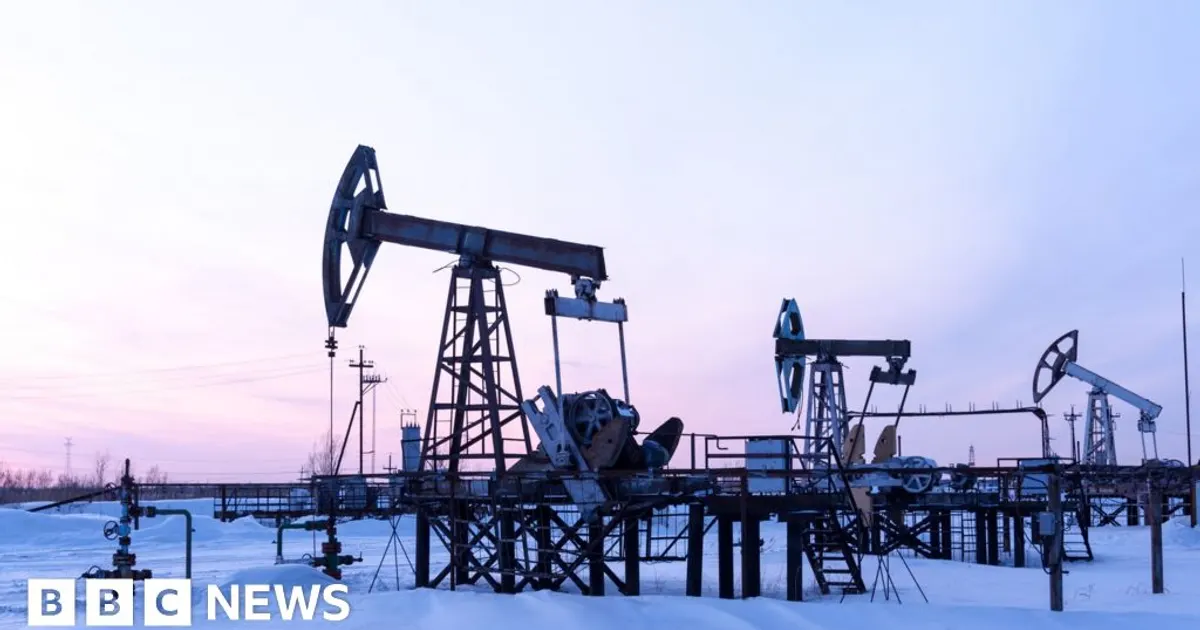
Brent crude passed $113 a barrel on March 2, 2022, its highest level since June 2014, as traders bought non-Russian crude. Buyers avoided Russian oil over sanctions and payment and shipping difficulties, and Trafigura could not sell a Russian cargo even at a record $18.60 discount to Brent.
Gas prices in the UK also roughly doubled.
Loss of Russian barrels from the market, roughly 8% of global supply, tightens crude and diesel availability and raises transport and feed production costs. The sanctions-driven discount on Russian crude shows the disruption is in trade flows, not just volumes.
 bbc.comJosh Martin02.03.2022
Nach 656 vergangenen Ereignisse (bullisch, Geopolitik) bewegte sich Rohöl (Brent) im Median über 5 Handelstage um +1,9 % (63% höher; mittlere Hälfte -2,7 % bis +6,6 %) und über 20 Handelstage um +0,7 %.
Nach 250 vergangenen Ereignisse (bullisch, Geopolitik) bewegte sich ULSD / Diesel im Median über 5 Handelstage um +1,7 % (58% höher; mittlere Hälfte -3,6 % bis +8,7 %) und über 20 Handelstage um +0,9 %.
Veränderungen des Benchmarks jedes Rohstoffs seit dem letzten Schluss vor dem Ereignis. Historische Werte bündeln frühere Ereignisse derselben Art; sie beschreiben, was passiert ist, nicht was passieren wird. Keine Anlageberatung.
Brent passed $113 on March 2 as buyers shunned Russian crude and shifted to non-Russian barrels, a trade-flow and supply shock.
Buyers shunned Russian crude and shifted to non-Russian barrels, lifting Brent above $113 on March 2.
