Lädt…
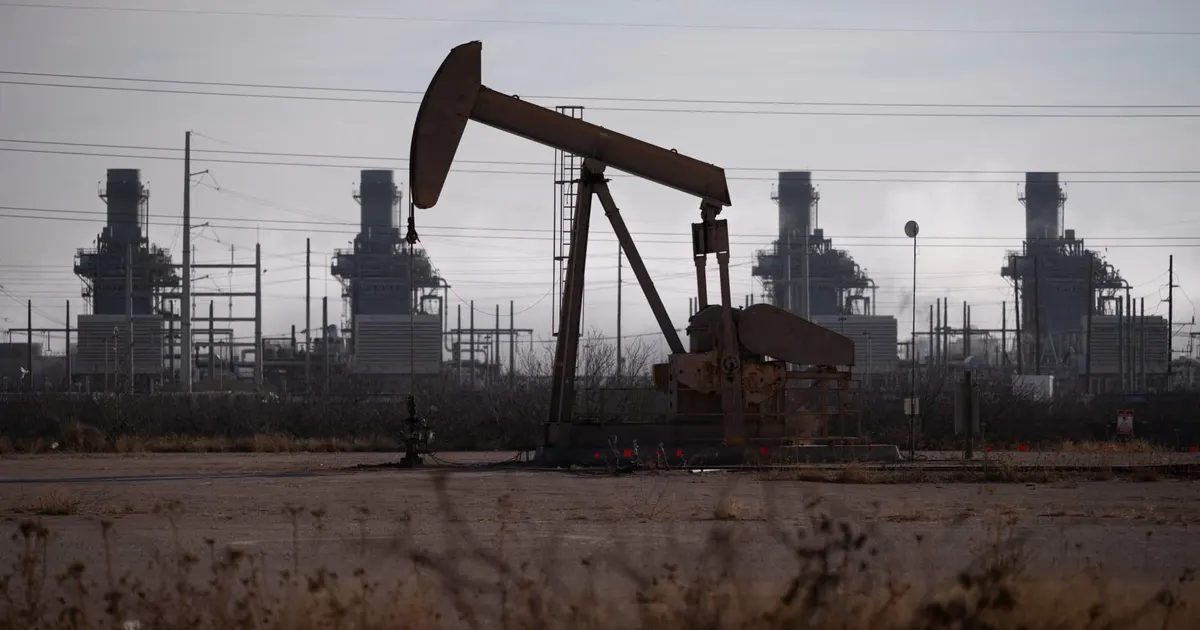
US crude futures fell more than 6% on April 4 to about $62.72 a barrel, touching below $61 intraday, the lowest since 2021. The decline followed tariff announcements seen raising recession risks and OPEC+ production hikes.
Weaker economic growth expectations and a bigger OPEC+ supply outlook reduce crude demand prospects, pressuring energy prices and lowering input costs for feed and fuel.
 cnbc.comJesse Pound04.04.2025
Nach 565 vergangenen Ereignisse (bearisch, Makro) bewegte sich Rohöl (WTI) im Median über 5 Handelstage um -1,4 % (41% höher; mittlere Hälfte -5,9 % bis +3,0 %) und über 20 Handelstage um -0,5 %.
Nach 312 vergangenen Ereignisse (bearisch, Makro) bewegte sich Rohöl (Brent) im Median über 5 Handelstage um -1,7 % (38% höher; mittlere Hälfte -5,4 % bis +2,3 %) und über 20 Handelstage um -1,7 %.
Nach 79 vergangenen Ereignisse (bearisch, Makro) bewegte sich ULSD / Diesel im Median über 5 Handelstage um -1,0 % (39% höher; mittlere Hälfte -5,7 % bis +1,7 %) und über 20 Handelstage um -1,5 %.
Veränderungen des Benchmarks jedes Rohstoffs seit dem letzten Schluss vor dem Ereignis. Historische Werte bündeln frühere Ereignisse derselben Art; sie beschreiben, was passiert ist, nicht was passieren wird. Keine Anlageberatung.
WTI fell more than 6% to a multi-year low on recession fears and OPEC+ supply hikes, which dragged down ULSD.
Apr 4 crude drop on recession fears and OPEC+ hikes, consistent with the window's demand and supply drivers.
US crude fell over 6% to the lowest since 2021 on recession risk and OPEC+ hikes, which supports the same demand and supply drivers.
US crude fell over 6% on April 4 on recession risk and OPEC+ hikes.
