Lädt…
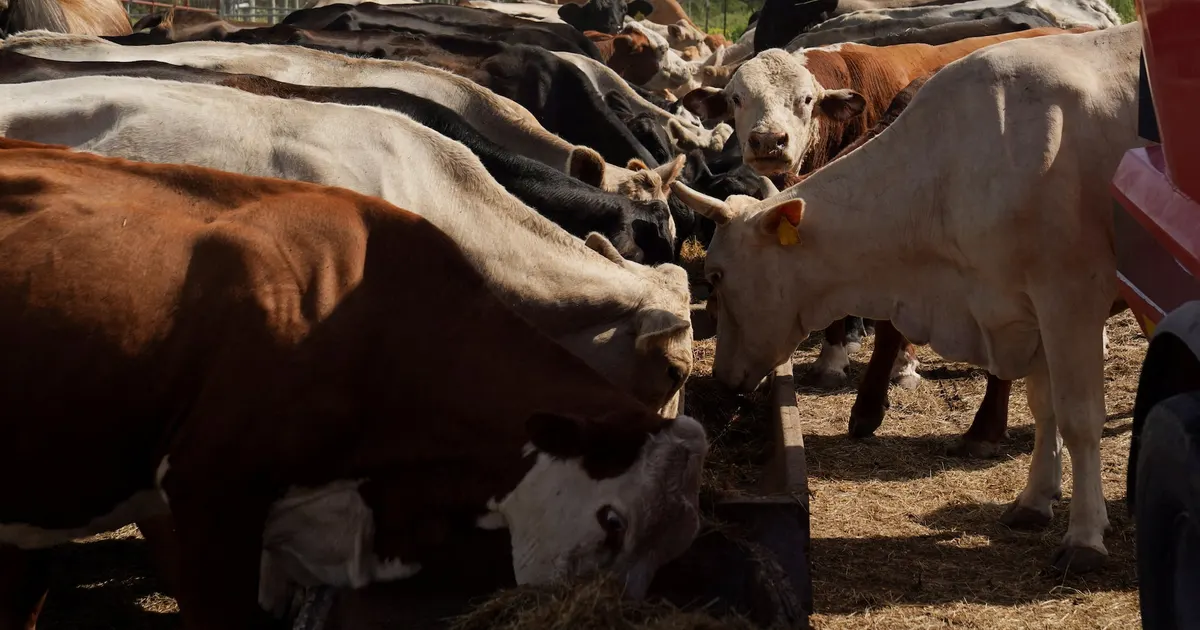
Tyson Foods plans to close a major US beef plant as cattle supplies remain tight. Meatpackers are paying steep prices for cattle, and beef prices have set records on low supplies and strong demand.
Closing a large packing plant reduces slaughter capacity and cattle demand, which is bearish for cattle prices even though tight supplies keep the underlying cattle market firm.
 apnews.comJosh Funk25.11.2025
 producer.comReuters, Tom Polansek24.11.2025
 reuters.comTom Polansek01.12.2025
Nach 20 vergangenen Ereignisse (bearisch, Logistik) bewegte sich Mastrinder (Feeder) im Median über 5 Handelstage um +1,3 % (60% höher; mittlere Hälfte -0,7 % bis +2,0 %) und über 20 Handelstage um +2,1 %.
Nach 29 vergangenen Ereignisse (bearisch, Logistik) bewegte sich Lebendrinder im Median über 5 Handelstage um -0,3 % (38% höher; mittlere Hälfte -2,0 % bis +0,5 %) und über 20 Handelstage um -3,7 %.
Veränderungen des Benchmarks jedes Rohstoffs seit dem letzten Schluss vor dem Ereignis. Historische Werte bündeln frühere Ereignisse derselben Art; sie beschreiben, was passiert ist, nicht was passieren wird. Keine Anlageberatung.
Reports of Tyson's plant closure explain the shock to packer demand for cattle despite tight supplies.
Tyson plant closure announcement reduces packer bidding capacity for cattle.
Tyson's plant closure news (reported Dec 1) falls inside the 5-day window and signals reduced packer slaughter demand for cattle, though the direction of the move is ambiguous given the 5.35% change.
