Lädt…
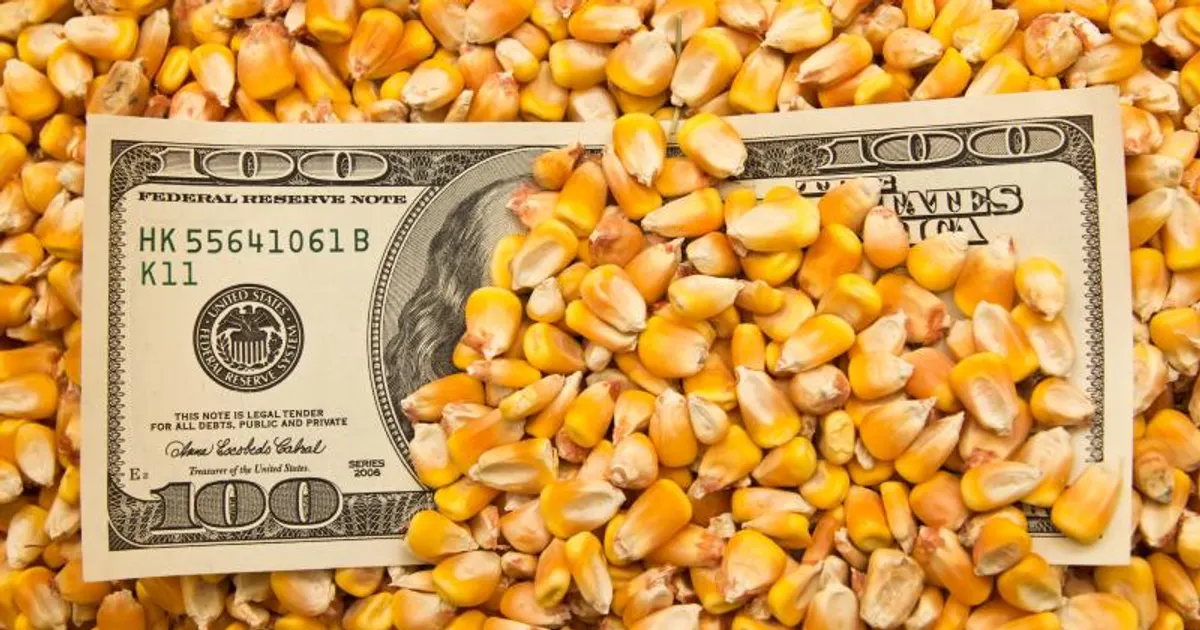
Corn futures fell 7.8% as crude oil collapsed, with Brent and WTI dropping to their lowest levels since April and early summer respectively. Investors sold commodities and bought U.S. government bonds, pushing the dollar to a 20-year high.
The USDA July report added little support, with a small rise in world corn production and ending stocks.
Weaker energy prices reduce the cost of biofuel-linked corn demand and pull grain prices lower, while a stronger dollar makes U.S. feed grains more expensive for importers. Buyers may see cheaper feed inputs in the near term.
 ukragroconsult.com13.07.2022
Nach 301 vergangenen Ereignisse (bearisch, Makro) bewegte sich Mais im Median über 5 Handelstage um -0,1 % (47% höher; mittlere Hälfte -2,2 % bis +1,3 %) und über 20 Handelstage um +0,2 %.
Nach 565 vergangenen Ereignisse (bearisch, Makro) bewegte sich Rohöl (WTI) im Median über 5 Handelstage um -1,4 % (41% höher; mittlere Hälfte -5,9 % bis +3,0 %) und über 20 Handelstage um -0,5 %.
Nach 312 vergangenen Ereignisse (bearisch, Makro) bewegte sich Rohöl (Brent) im Median über 5 Handelstage um -1,7 % (38% höher; mittlere Hälfte -5,4 % bis +2,3 %) und über 20 Handelstage um -1,7 %.
Nach 2.356 vergangenen Ereignisse (bullisch, Makro) bewegte sich US-Dollar (breit) im Median über 5 Handelstage um +0,2 % (60% höher; mittlere Hälfte -0,3 % bis +0,7 %) und über 20 Handelstage um +0,4 %.
Veränderungen des Benchmarks jedes Rohstoffs seit dem letzten Schluss vor dem Ereignis. Historische Werte bündeln frühere Ereignisse derselben Art; sie beschreiben, was passiert ist, nicht was passieren wird. Keine Anlageberatung.
Corn futures fell about 7.8% as crude oil collapsed, the dollar hit a 20-year high and investors sold commodities, with the bearish USDA report adding to the pressure.
Corn fell as crude oil collapsed, commodities were sold broadly and the dollar hit a 20-year high, a macro, energy and currency driver in the window.
