Lädt…
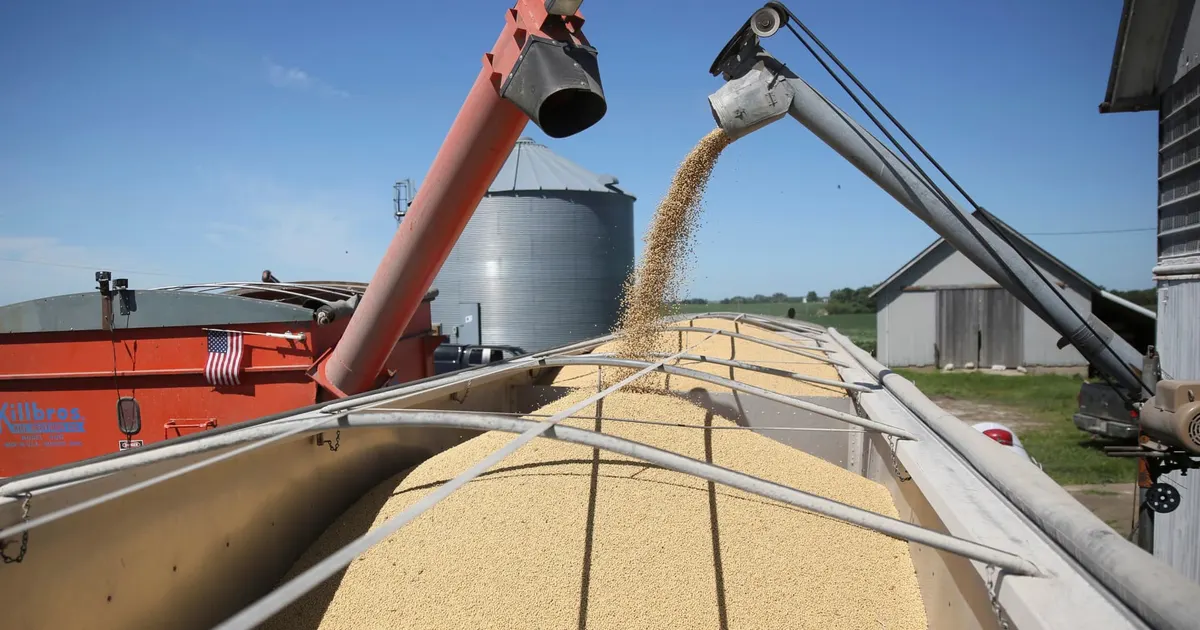
US soybean futures fell more than 4.5% on August 10 after USDA projected 2018-19 US soybean production at 4.586 billion bushels, above market forecasts. Ohio farmer Chris Gibbs said the trade war had cut prices about 20% and cost the US its largest customer.
The day's drop was the worst since the July low.
A larger-than-expected USDA crop estimate adds supply pressure to soybeans and soymeal, lowering feed protein costs while trade disruption limits export outlets.
 cnbc.comMichelle Fox10.08.2018
Nach 788 vergangenen Ereignisse (bearisch, Bericht) bewegte sich Sojabohnen im Median über 5 Handelstage um -0,3 % (47% höher; mittlere Hälfte -2,0 % bis +1,5 %) und über 20 Handelstage um -0,9 %.
Nach 399 vergangenen Ereignisse (bearisch, Bericht) bewegte sich Sojaschrot im Median über 5 Handelstage um -0,4 % (44% höher; mittlere Hälfte -2,4 % bis +1,2 %) und über 20 Handelstage um -1,0 %.
Veränderungen des Benchmarks jedes Rohstoffs seit dem letzten Schluss vor dem Ereignis. Historische Werte bündeln frühere Ereignisse derselben Art; sie beschreiben, was passiert ist, nicht was passieren wird. Keine Anlageberatung.
It documents the over 4.5% soybean drop on August 10 after USDA's above-forecast production projection, matching the move's size and timing.
Soybean futures fell more than 4.5% on the above-forecast production projection, a worse drop than any since the July low, which carried soymeal lower.
