Lädt…
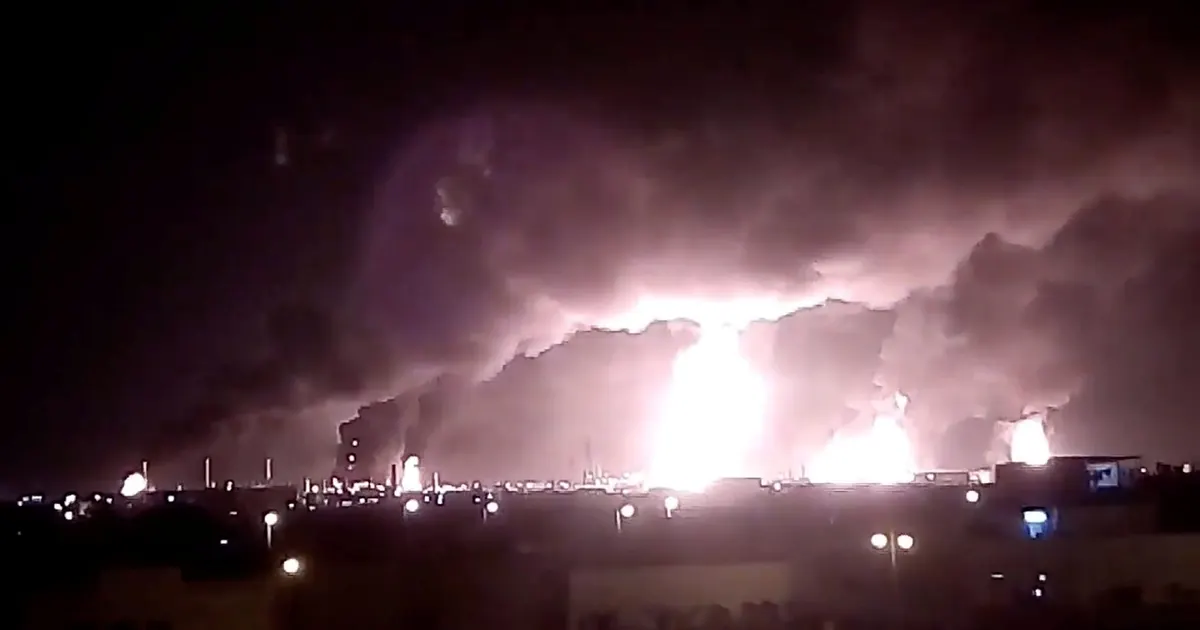
Following the attack on Saudi facilities, OPEC's global spare capacity cushion of about 3.21 million bpd was largely cut, with Saudi Arabia holding 2.27 million bpd of that. The remaining roughly 940,000 bpd is mostly held by Kuwait and the UAE, along with some in Iraq and Angola.
Analysts said those barrels would not be enough to fill the gap.
With little spare capacity left, any further supply disruption could send crude sharply higher, raising diesel, freight and fertilizer input costs. This raises the risk premium across energy-linked feed inputs.
 reuters.com16.09.2019
Nach 626 vergangenen Ereignisse (bullisch, Geopolitik) bewegte sich Rohöl (WTI) im Median über 5 Handelstage um +2,1 % (62% höher; mittlere Hälfte -2,3 % bis +8,5 %) und über 20 Handelstage um +1,6 %.
Nach 656 vergangenen Ereignisse (bullisch, Geopolitik) bewegte sich Rohöl (Brent) im Median über 5 Handelstage um +1,9 % (63% höher; mittlere Hälfte -2,7 % bis +6,6 %) und über 20 Handelstage um +0,7 %.
Nach 250 vergangenen Ereignisse (bullisch, Geopolitik) bewegte sich ULSD / Diesel im Median über 5 Handelstage um +1,7 % (58% höher; mittlere Hälfte -3,6 % bis +8,7 %) und über 20 Handelstage um +0,9 %.
Veränderungen des Benchmarks jedes Rohstoffs seit dem letzten Schluss vor dem Ereignis. Historische Werte bündeln frühere Ereignisse derselben Art; sie beschreiben, was passiert ist, nicht was passieren wird. Keine Anlageberatung.
The loss of OPEC spare capacity left little buffer against the outage, supporting higher prices.
