Lädt…
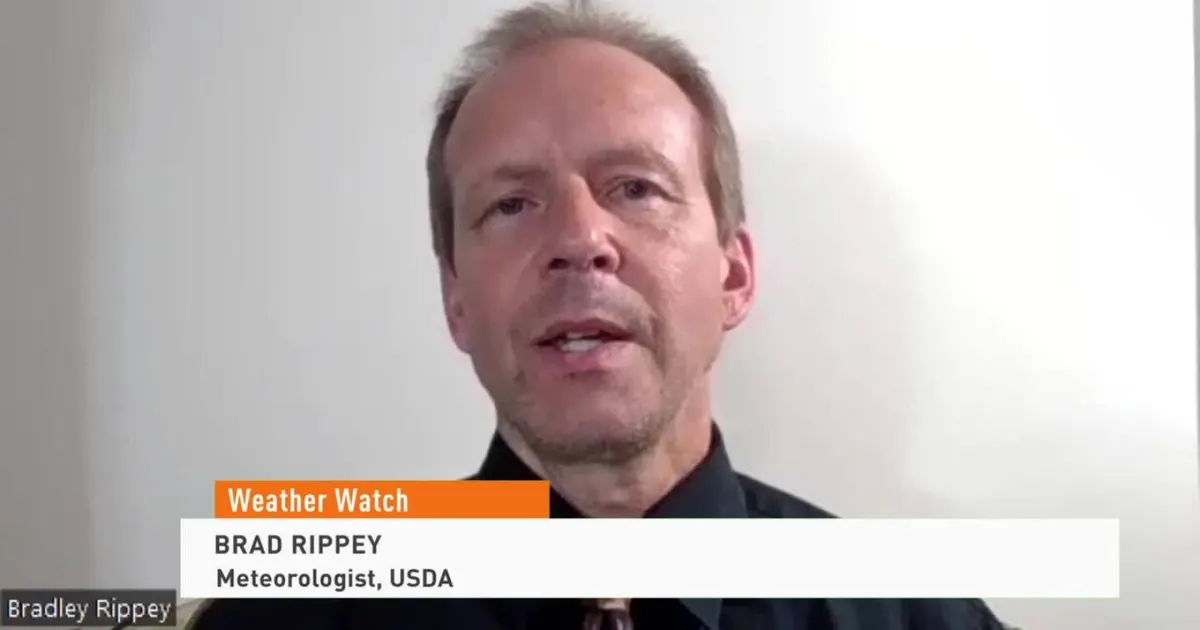
USDA meteorologist Brad Rippey said the Midwest is expected to have lower odds of extreme heat than much of the rest of the country over the next three months. NOAA precipitation outlooks show the Midwest near average, with more drought risk out west.
Rippey said growing conditions have been favorable overall.
Favorable Midwest weather and yield prospects point to ample corn and soybean supply, which is bearish for feed grain and meal prices.
 agweb.com22.07.2024
Nach 357 vergangenen Ereignisse (bearisch, Wetter) bewegte sich Mais im Median über 5 Handelstage um -0,3 % (44% höher; mittlere Hälfte -2,2 % bis +1,3 %) und über 20 Handelstage um -0,5 %.
Nach 363 vergangenen Ereignisse (bearisch, Wetter) bewegte sich Sojabohnen im Median über 5 Handelstage um -0,6 % (42% höher; mittlere Hälfte -2,5 % bis +1,1 %) und über 20 Handelstage um -0,2 %.
Veränderungen des Benchmarks jedes Rohstoffs seit dem letzten Schluss vor dem Ereignis. Historische Werte bündeln frühere Ereignisse derselben Art; sie beschreiben, was passiert ist, nicht was passieren wird. Keine Anlageberatung.
Favorable Midwest weather outlook with lower extreme-heat odds supports big US crop expectations, adding bearish supply pressure.
