Lädt…
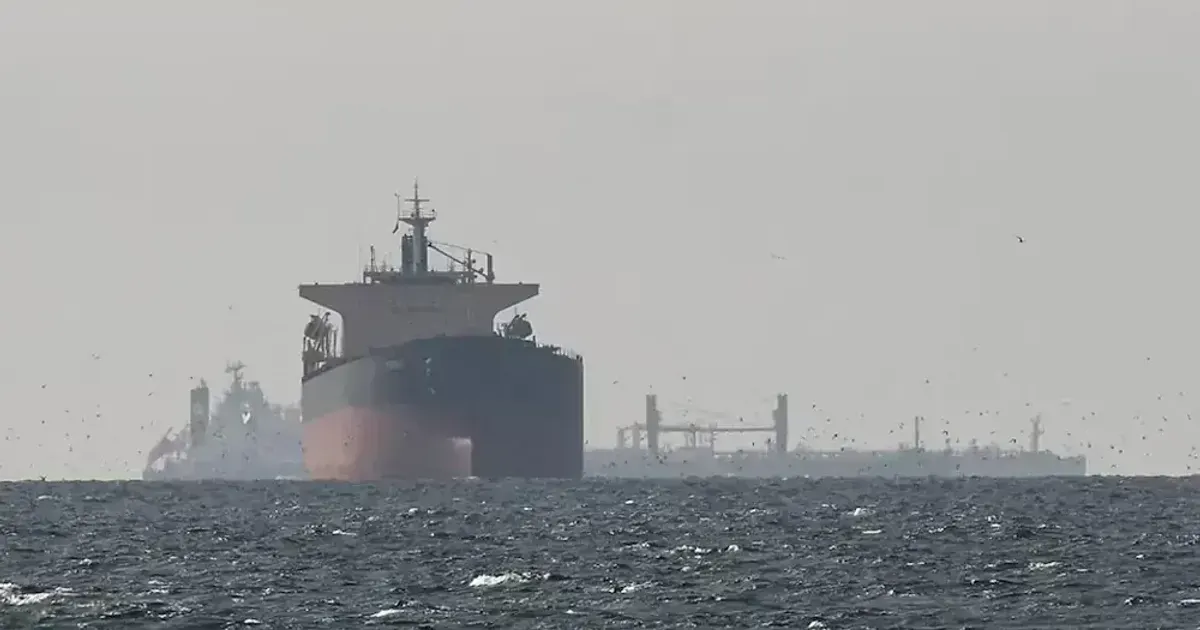
Physical crude prices in the Middle East, Europe and Africa jumped to two-month highs, with some cargoes nearing $110 a barrel. Dated Brent hit $105.70 on Thursday, its highest since late May and first breach of $100 since early June, and North Sea Forties reached $108.77 on Friday.
The moves followed Houthi attacks on Red Sea tankers, the collapse of a preliminary US-Iran peace deal, Hormuz export disruption and Ukrainian strikes that cut Kazakh output.
Higher crude raises diesel and freight costs and pushes up energy-linked feed inputs, while rerouted tankers add shipping cost and time. Vegetable oil and biofuel demand may firm as crude rises, supporting soybean oil and palm oil prices.
 brecorder.comReuters24.07.2026
Nach 656 vergangenen Ereignisse (bullisch, Geopolitik) bewegte sich Rohöl (Brent) im Median über 5 Handelstage um +1,9 % (63% höher; mittlere Hälfte -2,7 % bis +6,6 %) und über 20 Handelstage um +0,7 %.
Nach 626 vergangenen Ereignisse (bullisch, Geopolitik) bewegte sich Rohöl (WTI) im Median über 5 Handelstage um +2,1 % (62% höher; mittlere Hälfte -2,3 % bis +8,5 %) und über 20 Handelstage um +1,6 %.
Nach 250 vergangenen Ereignisse (bullisch, Geopolitik) bewegte sich ULSD / Diesel im Median über 5 Handelstage um +1,7 % (58% höher; mittlere Hälfte -3,6 % bis +8,7 %) und über 20 Handelstage um +0,9 %.
Noch nicht genug vergleichbare vergangene Ereignisse für eine historische Einschätzung.
Veränderungen des Benchmarks jedes Rohstoffs seit dem letzten Schluss vor dem Ereignis. Historische Werte bündeln frühere Ereignisse derselben Art; sie beschreiben, was passiert ist, nicht was passieren wird. Keine Anlageberatung.
Physical crude prices surged with Dated Brent at $105.70 on the collapse of the US-Iran peace deal, Hormuz disruption and Kazakh output cuts, corroborating tight supply, though it is dated after the window ends.
Physical prices and Dated Brent surged on the same Red Sea and Hormuz disruptions plus the collapsed peace deal, confirming the tightness, though it was published a day later.
