Lädt…
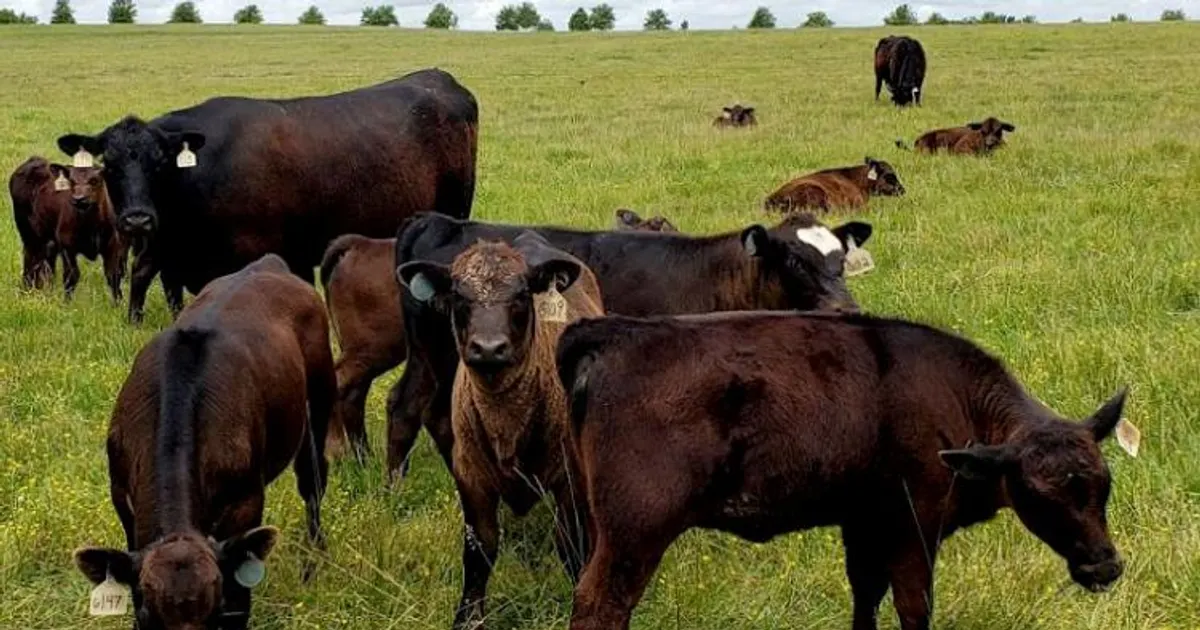
University of Kentucky agricultural economist Kenny Burdine said COVID-19 demand shocks hit cattle close to harvest hardest, with fed cattle prices falling sharply. CME March feeder cattle futures had dropped nearly $25 per hundredweight from early March through March 16.
Kentucky heavy feeders had held up better, supported by good pasture conditions.
Lower fed and feeder cattle values reduce the cost of finishing rations for feeders and signal weaker near-term cattle demand for feed. Pasture conditions limit supply impact in the short run.
 lanereport.comKevin O. Stinnett17.03.2020
Nach 70 vergangenen Ereignisse (bearisch, Krankheit) bewegte sich Lebendrinder im Median über 5 Handelstage um +0,0 % (51% höher; mittlere Hälfte -1,7 % bis +1,0 %) und über 20 Handelstage um +0,4 %.
Nach 46 vergangenen Ereignisse (bearisch, Krankheit) bewegte sich Mastrinder (Feeder) im Median über 5 Handelstage um +0,3 % (54% höher; mittlere Hälfte -2,3 % bis +1,6 %) und über 20 Handelstage um +1,8 %.
Veränderungen des Benchmarks jedes Rohstoffs seit dem letzten Schluss vor dem Ereignis. Historische Werte bündeln frühere Ereignisse derselben Art; sie beschreiben, was passiert ist, nicht was passieren wird. Keine Anlageberatung.
Notes March feeder futures fell nearly $25/cwt through March 16 on COVID-19 demand shocks, giving context for the continued selloff on the move date.
Notes March feeder futures down nearly $25/cwt from early March through March 16, corroborating the magnitude, though it extends beyond the window.
