Lädt…
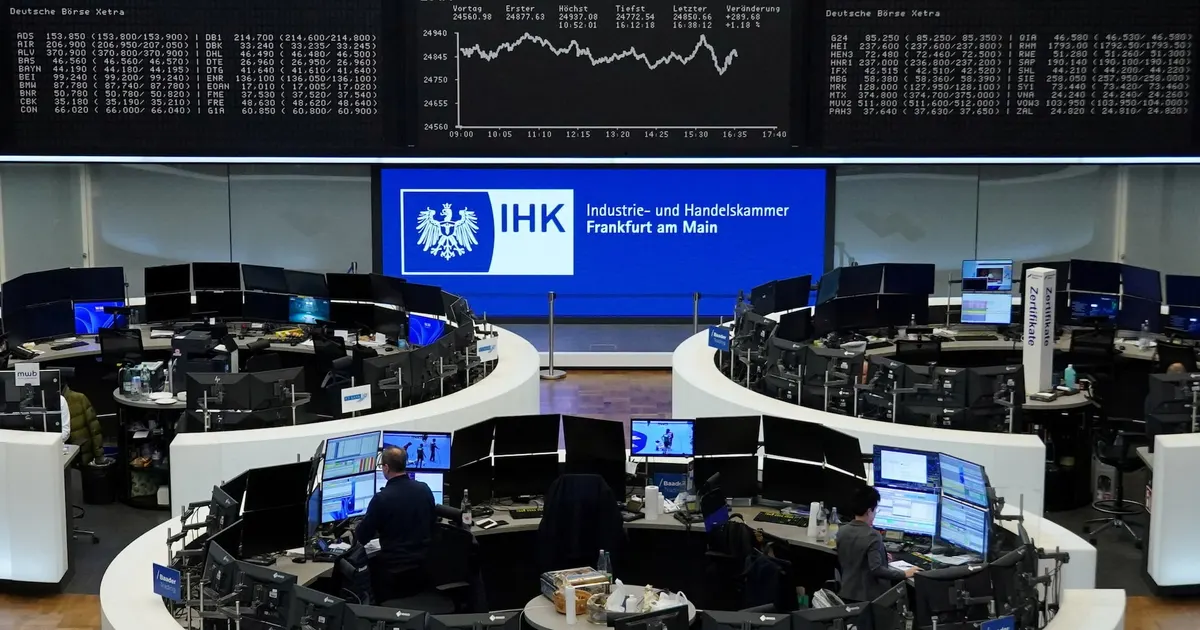
The euro fell 0.3% to $1.1656 on Tuesday, its lowest since January, and sterling touched its weakest level against the dollar since December. Gilt yields rose on concerns that higher oil prices will feed into inflation.
JPMorgan said Brent at $100-$120 could push the euro to $1.10-$1.13 if the conflict lasts more than three weeks.
A sustained oil spike would raise European energy and inflation pressures, weakening the euro and sterling and tightening financial conditions. Higher Brent also raises diesel and freight costs for feed supply chains.
 reuters.comAlun John02.03.2026
Nach 656 vergangenen Ereignisse (bullisch, Geopolitik) bewegte sich Rohöl (Brent) im Median über 5 Handelstage um +1,9 % (63% höher; mittlere Hälfte -2,7 % bis +6,6 %) und über 20 Handelstage um +0,7 %.
Nach 36 vergangenen Ereignisse (bearisch, Geopolitik) bewegte sich Euro (USD pro EUR) im Median über 5 Handelstage um -1,0 % (22% höher; mittlere Hälfte -1,8 % bis -0,3 %) und über 20 Handelstage um -0,7 %.
Noch nicht genug vergleichbare vergangene Ereignisse für eine historische Einschätzung.
Nach 89 vergangenen Ereignisse (bullisch, Geopolitik) bewegte sich US-Dollar (breit) im Median über 5 Handelstage um +0,5 % (74% höher; mittlere Hälfte -0,0 % bis +1,0 %) und über 20 Handelstage um +0,3 %.
Veränderungen des Benchmarks jedes Rohstoffs seit dem letzten Schluss vor dem Ereignis. Historische Werte bündeln frühere Ereignisse derselben Art; sie beschreiben, was passiert ist, nicht was passieren wird. Keine Anlageberatung.
Euro hit its lowest since January on Iran war widening and oil-inflation worries, with JPMorgan flagging further downside if Brent stays elevated; dated 2 March so coincident with the move.
Euro and sterling weakness against the dollar on oil-inflation fears matches the move, though the report is dated slightly after March 2 (Tuesday).
